By Miles Layton
WASHINGTON COUNTY — Michael Whatley, the Republican nominee for United States Senate, came to Eastern North Carolina last week with a straightforward message: the federal government has ignored this region for too long, and he intends to fix that from the floor of the Senate.
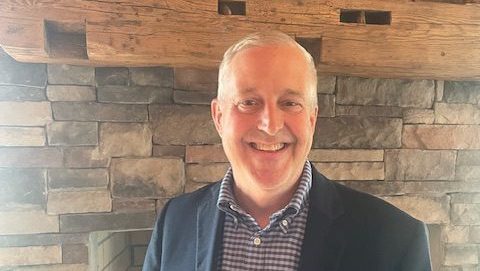
Whatley — a North Carolina native, former chairman of the Republican National Committee, and the endorsed candidate of former President Donald Trump — sat down with the Albemarle Observer before the Salute to Service event at Harris Farm in Washington County. He spoke at length about the economic pressures facing rural communities, a public safety record he calls disqualifying for his Democratic opponent, the role of faith in public life, and what he says are the clear stakes of November’s race.
Why cover this story? Because it’s not every day that this rural editor gets an exclusive interview with a national figure like Whatley. We talked for a few minutes before the Salute to Service fundraiser on Saturday in Washington County.
Fighting for Farms, Small Business, and Manufacturing
For Washington County families who have watched opportunities dry up and young people leave for bigger cities, Whatley offered a direct prescription.
“When you think about Eastern North Carolina, it really comes down to farms, small businesses, and manufacturing,” he said. “What we want to do is fight every single day to make sure that we’ve got the right policies in place that are going to help farms, that are going to help small manufacturers, that are going to help small businesses create more jobs — because ultimately, we want people to take home more money.”
The path to that goal, Whatley said, runs through Washington, not Raleigh — through trade policy, federal regulation, and the tax code that shapes what Eastern North Carolina producers actually keep after a season’s work.
“We want lower taxes so that they get to keep more of their money,” he said. “We want to make sure that we have a regulatory regime, a tax structure, trade structures that are going to work to help everybody across this region.”
Whatley noted that a recent swing through the region included stops with seafood industry workers and boat manufacturers in Dare County — a reminder, he said, that Eastern North Carolina’s economy is more diverse than outsiders often recognize.
“Eastern North Carolina is synonymous with farming — but it’s not everything about farming,” he said. “The issues they’re dealing with from the federal government side are regulatory, tax, trade. We just want to make sure that we are fighting every day for the right policies that are going to set this area up to thrive.”
Cooper’s Crime Record: ‘Absolutely Unexcusable’
On public safety — an issue that resonates deeply in communities across the region — Whatley delivered a blunt indictment of former Governor Roy Cooper, the Democrat now running against him for the Senate seat being vacated by Sen. Thom Tillis.
“The number one function for any government — whether it’s local, state, or federal — is to protect its citizens,” Whatley said. “When we talk about crime in North Carolina, we have talked about Roy Cooper and his failed agenda. That guy gets an F when we talk about crime.”
Whatley pointed to the summer of 2020 as an early signal of where the governor’s priorities lay. “Roy Cooper — back in 2020 when Antifa and BLM were burning down our cities — he was marching with them. He didn’t call in the National Guard to put down the riots. He marched with them.”
Cooper also issued an executive order establishing a task force that advanced pretrial release and cashless bail policies, Whatley said, cycling repeat offenders back onto the streets within hours of arrest.
But Whatley reserved his harshest criticism for Cooper’s decision to release more than 4,200 state prison inmates early during the COVID-19 pandemic.
“These are hardened criminals — hundreds who had committed assaults, aggravated assaults, assault with a deadly weapon, sexual assaults, murders,” Whatley said. “He let them out because he was concerned they were going to get COVID while they were in prison. Seventy of those people committed murder — killed somebody. Fifty-three of them were serving life sentences at the time he let them out. That is absolutely unexplainable. It’s absolutely unexcusable.”
Within two years, more than 2,200 of those released inmates — over half — were rearrested. Whatley cited the case of Carlos Brown Jr., who was rearrested and released 13 additional times after Cooper freed him before allegedly murdering a woman on a Charlotte light rail car.
“She should be alive today,” Whatley said. “That monster should not have been on the streets. There are 18 others on that list who have gone on to kill people since Roy Cooper let them out.”
His pledge on public safety was unambiguous: “We’re going to back the blue. We’re going to support law enforcement. We’re going to keep the bad guys behind bars.”
A Man of Faith, for a Region of Faith
As an evangelial Christian, I figured folks in Eastern NC, where Sunday mornings still mean church pews and community ties, wanted to know where Whatley stands as a man of faith. He answered with his biography.
“I got a religion degree from Wake Forest. I got a theology degree from Notre Dame when I was up there in law school,” he said. “I work six days a week, and on Sunday I go to church — and everybody on my team knows it. Sunday morning, I am in church, and I am home, and I am going to take the Sabbath.”
He contrasted that personal commitment with Cooper’s gubernatorial record, which includes vetoes of the Parents’ Bill of Rights, school choice opportunity scholarships, legislation banning gender transition surgeries for minors, and a bill to keep biological males out of women’s sports and locker rooms.
“On issue after issue, Roy Cooper’s record is a terrible one from the faith perspective,” Whatley said. “I firmly believe people’s moral compass does not get stronger after they get elected. You need to have people who are going to go in there and fight for Christian values, fight for Judeo-Christian values. That will be a guiding light for me when I get into the Senate.”
As state Republican Party chairman, Whatley said he convened more than 35 pastor lunches across North Carolina, bringing together more than 3,000 clergy members to encourage greater civic engagement from people of faith — a constituency he clearly hopes to energize this fall.
On Trump: ‘What You See Is What You Get’
Whatley’s relationship with Donald Trump stretches back more than a decade, to a moment when almost no one in North Carolina politics was taking the New York businessman seriously.
“At the time he was at one percent in the polls — fifteenth out of 15 in the Republican primary,” Whatley recalled of answering a call from Trump Tower in 2015 asking for help with Trump’s long-shot North Carolina campaign. “But when that guy came down the stairs and said, ‘I am going to make America great again,’ it wasn’t just a pithy campaign slogan he borrowed from Ronald Reagan. It was a plan. It was: make sure we’re going to rebuild our economy, restore our borders, keep our communities safe, and make sure America is the strongest, most respected country around the world. And that is the values of North Carolina.”
That early bet on Trump has defined Whatley’s political career ever since, and the two men have remained close. Whatley said he spoke with Trump shortly after the assassination attempt in Butler, Pennsylvania last year, and that Trump’s response revealed something essential about the man.
“He told me he believed that God saved his life so that he could make a difference,” Whatley said. “And that truly epitomizes that guy. He is relentless. He is a workhorse. What you see is what you get.”
‘The Choice Is Very, Very Stark’
Whatley closed by drawing the sharpest possible line between himself and Cooper for voters making their decision in November.
He noted that North Carolina is home to nearly 100,000 active-duty service members — close to ten percent of the entire U.S. military — and pledged to fight for every one of them. Cooper, he charged, has already announced he would have voted against the federal tax relief package that Whatley says saved the average North Carolina household $5,700 on Tax Day.
“Roy Cooper raised our taxes as a legislator and vetoed tax cuts as governor,” Whatley said. “As soon as he gets in the Senate, he’s going to fight to raise your taxes. The choice in this election is very, very stark.”
He summed up his commitment in plain terms Washington County voters could take to the bank.
“I’m going to fight for people to make more money. I am going to fight for them to keep more money. I am going to fight to keep our kids and our communities safe. And I am going to support our military.”
In a county where the land is worked hard, faith runs deep, and patience with Washington politicians runs thin, Whatley is betting that message carries the day.
“All elections have consequences,” he said. “But the consequences of this election are going to be absolutely tremendous.”
Make a one-time donation
Make a monthly donation
Make a yearly donation
Choose an amount
Or enter a custom amount
Your contribution is appreciated.
Your contribution is appreciated.
Your contribution is appreciated.