By Nicole Bowman-Layton
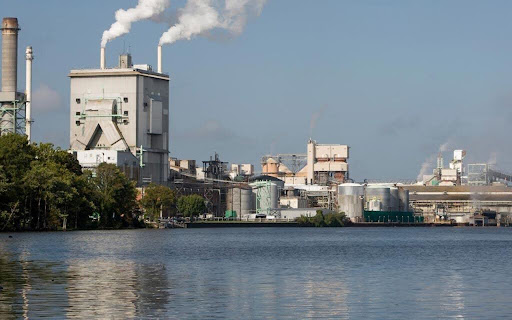
PLYMOUTH — A long-running fish-consumption advisory remains in effect for waters in the Plymouth area as federal and state officials seek public input on a plan to address natural-resource damage associated with decades of pollution from the Plymouth paper mill.
The advisory applies to certain fish caught in the lower Roanoke River and other affected waters because of dioxin contamination. It does not prohibit fishing, but state guidance limits consumption of catfish and carp from affected waters.
That distinction may be particularly important in Plymouth and other communities along the lower Roanoke, where recreational fishing remains common.
Federal officials say pollution associated with the mill damaged fish in the lower Roanoke River and contributed to long-term fish-consumption advisories.
“Discharges of hazardous substances from the Plymouth Mill caused serious harm to fish in the Lower Roanoke River resulting in long-term fish consumption advisories and impacts to recreational fishing,” NOAA Restoration Center official Howard Schnabolk said in announcing the proposed restoration plan.
The government’s complaint also says dioxin has been identified in fish tissue in Welch Creek, the lower Roanoke River and western Albemarle Sound and says those waters have been subject to state fish-consumption advisories because of the contamination.
Public has until Oct. 16 to comment
Residents now have an opportunity to weigh in on how federal and state officials propose to restore natural resources they say were damaged by the contamination.
Comments on the Draft Phase 2 Restoration Plan and Environmental Assessment are being accepted through Oct. 16 by the U.S. Fish and Wildlife Service, National Oceanic and Atmospheric Administration and N.C. Department of Environmental Quality, which are serving as trustees for the affected natural resources.
The plan includes approximately $1.75 million for a future floodplain reconnection, wetland protection and fish-passage project along the lower Roanoke River. NOAA says the project could reconnect about three miles of historic stream channels and improve more than 600 acres of habitat.
The plan also calls for permanent conservation of approximately 760 acres at Warren Neck along the Roanoke River and recognizes previously completed restoration projects, including improvements at Plymouth Waterfront Park and its boat ramp.
Comments on the restoration plan must be received by Oct. 16 and can be emailed to Howard.Schnabolk@noaa.gov or mailed to Howard Schnabolk, NOAA, 2234 South Hobson Avenue, Charleston, SC 29405.
Read NOAA’s restoration plan and public-comment information
Pollution dates back decades
According to the U.S. Department of the Interior, the Plymouth site has operated as a wood and paper products manufacturing facility since 1937. DOI says wastes containing dioxins, furans and mercury were discharged into Welch Creek and the Roanoke River during its operating history.
The federal lawsuit focuses on Weyerhaeuser’s operations from approximately 1957 through 2007. The complaint alleges the company disposed of untreated wastes containing dioxins, furans and mercury. Domtar has owned and operated the site since 2007.
According to the complaint, those wastes contaminated groundwater, sediment, soil and surface water and reached Welch Creek, the Roanoke River and Albemarle Sound.
Although the industrial site itself is in Martin County, it is approximately 1.5 miles from Plymouth and near the confluence of Welch Creek and the Roanoke River. The waters identified as affected extend into Washington County and the Plymouth area.
Lawsuit seeks damages
The United States and North Carolina filed a seven-page federal complaint against Domtar Paper Company LLC Sept. 16 in U.S. District Court for the Eastern District of North Carolina.
The lawsuit seeks damages under the Comprehensive Environmental Response, Compensation and Liability Act, commonly known as CERCLA or the Superfund law.
The government alleges hazardous substances released at or near the former Weyerhaeuser Plymouth Wood Treating Plant injured or resulted in the loss of publicly held natural resources.
Federal and state trustees say they have conducted a natural-resource damage assessment and determined hazardous substances released from the site injured natural resources, including fish.
The United States and North Carolina have also negotiated a proposed consent decree with Domtar that would resolve the claims.
Under the proposed agreement, Domtar would pay $1.75 million plus interest toward restoration and another $155,000 plus interest for future restoration planning, implementation and monitoring oversight. Domtar does not admit liability under the proposed agreement.
The Justice Department has not yet scheduled the separate public-comment period on the proposed consent decree. That opportunity will be separate from the Oct. 16 deadline for comments on the restoration plan.
The Federal Lawsuit
Proposed restoration plan and environmental assessment
Let us know what you think by leaving a comment. Comments are subject to approval.