
By Miles Layton
I made a pilgrimage to Walton’s Mountain — yes, that Walton’s Mountain, Earl Hamner Jr.’s homeplace in Schuyler, Virginia, deep within the Blue Ridge Mountains.
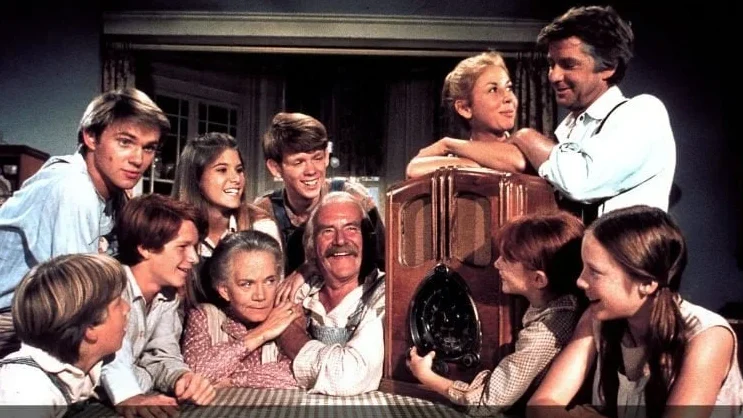
During the 1970s, Hamner’s pen wrote the television series about the Walton family, a Depression-era family that overcame adversity while remaining connected to each other and their community.
Though I don’t watch much television these days, I think it’s safe to say the major networks don’t and won’t produce shows like this anymore. That’s too bad because the Waltons exemplified the best qualities of America – strong family, faith, community, and an ambition to move forward – not aiming for wealth, but for purpose.
The Waltons had deep roots in the community and a sense of place – that’s important – so important that people go looking for that sense of place they left behind after they’ve moved away. I understand that search for place – when I moved away, though I found solace in West Virginia’s mountains, it was never quite the same as being home in Eastern NC.


That sense of place is what makes our way of life special, worth protecting, worth saving, worth embracing each and every day. That’s one of the big lessons I learned from the Waltons.

Let me clear – home is where you make it. If you embrace the community, it will embrace you, especially in the places between Edenton and Swan Quarter, between Camden and Williamston and certainly other places I know — Tangier, Virginia – an island community fortified by faith and family – also, the hollers of West Virginia, or Athens, Ohio, are great because of the people.

I admired each of the Waltons’ characters in their own way.
I wanted to be like Johnboy because he was a writer and published the Blue Ridge Chronicle, a weekly newspaper covering that neck of the woods. Growing up, even into adulthood, that’s what I wanted to do – run a community weekly or small daily newspaper. Then and now, I want to help others through my writing.
John Walton, Sr. – a good conscience, caring father and husband.
Olivia Walton – a great mother, certainly an equal partner in their marriage.
And I’ll say I liked the grandmother, Esther Walton, because of her strong Christian faith. Her husband, Zeb, was wise and had a good sense of humor, and he was deeply connected to the land and his family.
There were a lot of Southern social values and norms shown in the Waltons that should be commonplace – values like strong family bonds, respect for elders/teachers/law enforcement, hard work, integrity, frugality, the importance of a good education, humility, and acceptance of others’ ideas, even when you disagree with them, were once commonplace.
However, they’re not as common as one might think – something has happened along the way to national culture. Maybe we got too big, maybe too rich. There is no denying that the emptiness of spirit afflicts some folks in this day and age. We need to return to simpler times to restore our souls, when a common sense approach to life is… well… common.
Growing up, I spent a lot of time with my great-grandmother – a product of farmlife, wars, deaths, the Great Depression, no television until much later in life, no county water, a wood stove until she got an electric one, which she was reluctant to use. She was rooted in the community – called folks on Sundays, knew the church hymnal by heart. There are a lot of folks in Northeast NC who are like her – that’s refreshing.
Last year, I wrote a story about Lois Ashley – she reminds me of women like my great-grandmother – a grand generation of people who raised families and embraced civility, kindness.
This generation built something – businesses, families, and people engaged in civic life and public service – not one that complained or posted nonsense intended to gaslight folks on social media. Instead, my great-grandmother would be more inclined to find common ground with her neighbors. Maybe that approach is how she got men to dig her a new well or help her organize a church Homecoming luncheon in a kitchen filled with different personalities – all of whom want what’s best for the congregation.
Hamner’s homeplace is a hike from any big city or even a small town. Charlottesville is the closest city – not sure how they did that trip in the days of dirt roads before paved highways. Richmond might as well have been in Europe. And I’m not sure why, in that one episode, Johnboy chose to get a job in Wheeling, WVa, to support his family – Wheeling is at least 325 miles away, and that’s via modern highways.
Because Schuyler is such an isolated place, much like rural parts of our region, you are likely to know your neighbors.
Hamner’s white two-story house sits on a hill – yes, you can see the trees and mountains all around.

Rockfish River – that flows pretty good, but it’s not that deep, so some of the show’s drama surrounding cars crashing into the river was not really necessary.
The lumber mill or coal mine or whatever it was in the show – the ruins of that industrial site are still there.
I didn’t see Ike’s store or the Baptist Church that the family attended, but the high school that Hamner attended is now a museum dedicated to the show’s memory.

As I say goodnight like the Waltons did in the end credits, I’m hoping people realize that a sense of place is important, values mean something, and that we create the world we live in, so let’s make it like Walton’s Mountain.
Subscribe — it’s free!


