BY MILES LAYTON
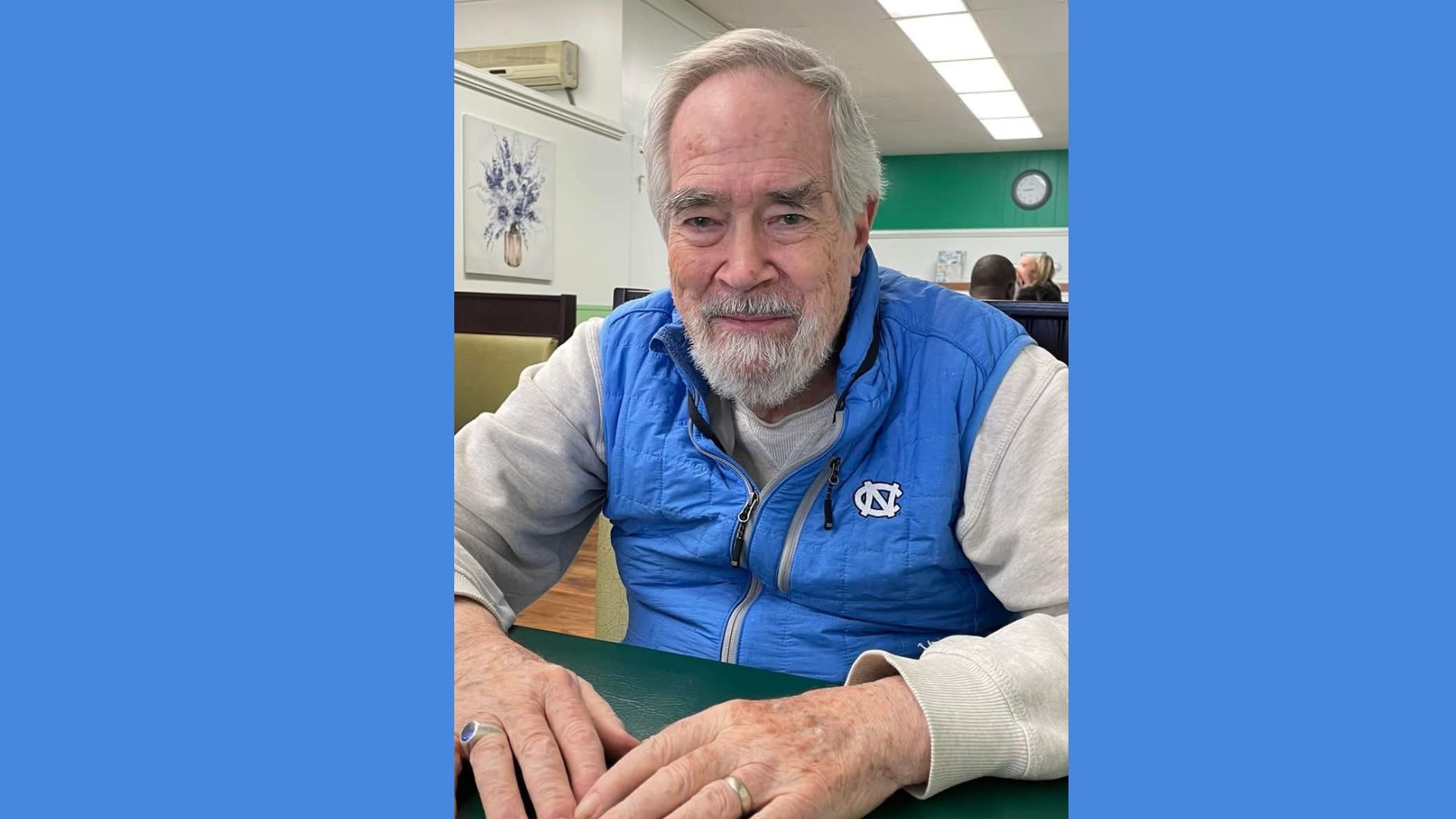
EDENTON — I’ve known John Mitchener for many years — so I took an opportunity to interview him about his life and times.
We talked about Edenton and Chowan County where he was very fortunate to grow up. True, there’s much more to John’s story than these few hundreds of words say, but here is a what I hope to be the start of an evolving portrait of not only this man’s life, but Chowan County’s past and present.
And John, as I have time to process your past columns, I’ll publish them online at the Albemarle Observer. On that note, it was one of your columns, one that got missed by the local media, that helped inspire the formation of the Albemarle Observer.
Back to our story — When you walk along Edenton’s Broad Street — past the courthouse green and down toward the waterfront — history seems to breathe from every brick and weathered storefront. For Mitchener, those bricks and stories are more than scenery. They are his life. A pharmacist, civic leader, and historian, Mitchener’s story is also the story of Edenton itself: a small coastal town that has managed to hold its character while the world around it has changed.
A Family Rooted in Service
Mitchener’s story begins long before his own arrival in 1941. His grandfather, born in 1875 as the youngest of ten children in Johnston County, made his way to Edenton around the turn of the century. At that time, Edenton was “more remote than remote,” Mitchener says, recalling that travel required ferry crossings and dirt roads. Yet his grandfather saw promise in the sleepy harbor town and built a pharmacy business that would anchor the family for generations.
Mitchener’s parents, both graduates of the University of North Carolina School of Pharmacy, carried on that legacy. His mother was one of only two women in her class in 1936 — a rarity that Mitchener says reflected both her courage and intellect. “The joke was that my dad courted her by carrying her books across campus,” he said with a smile. “That was how you met girls back then — you offered to carry books.”
After marrying in 1939, the couple ran Mitchener’s Pharmacy, a fixture on Broad Street that served Edenton for decades. The store was more than a business; it was a gathering place where townspeople shared their stories, ailments, and hopes for the community. John grew up among the smell of liniment and the rhythm of small-town conversation.
Growing Up in a Small Town
Edenton in the 1940s and ’50s was a place where everyone knew everyone. On Saturdays, young John might be found watching crop dusters lift off from makeshift runways on the edge of town or walking down to the waterfront to fish near the three old cannons by the cypress trees. He remembers his neighbor, attorney and fisherman John Fernando White, introducing him to the Chowan River.
“He took me out one foggy morning,” Mitchener recalls. “The fog got thicker as the sun rose. You couldn’t see land. I remember thinking, I can’t swim that far, I can’t drink that much water, and I can’t walk on waves like Jesus did. So I just sat there and watched. It was magical.”
Those early days in Edenton — surrounded by faith, family, and the river’s endless horizon — shaped his love for both people and place.
Vietnam Veteran
Mitchener served 19 months in the U.S. Army — from September 1967 and May 1969 — including a 15-month tour as a pharmacist at a field hospital near Saigon, what was then the capital of South Vietnam.

Mitchener said he settled into his tour of duty at the 218th Medical Dispensary, filling prescriptions for the military in the wider Saigon area. He also helped foreign nationals from allied embassies, workers on U.S. Agency for International Development contracts, plus those associated with Air America or Air Vietnam. He recalled seeing a steady stream of soldiers from the Mekong Delta who saw doctors for blood tests, X-rays, medications and more.
“I was shorthanded,” Mitchener said. “I filled prescriptions thoughtfully as I was board certified in North Carolina. I learned later that the Army at Fort Sam Houston, Texas, put high school dropouts through a nine-month crash course to handle medicines.”
Mitchener said he saw a lot of soldiers and sailors who suffered itching infections caused by their “messy, wet work” of marching around the Mekong Delta.
“One group was grouchy, short-tempered, and tired,” he said. “Everyone hurt and wanted relief yesterday. They needed pain medicine now and meds to reduce the urge to scratch. Steroids — oral and topical —were frequently dispensed for parasitic infections. The Mekong crud from leeches or other critters in the waters was worse than” the enemy.
Mitchener said he in fact had only been in Vietnam a few days when an enlisted man died in the ward at the field hospital. Memories of his trip to the air base’s morgue linger to this day.
“I escorted the corpse to the morgue at the air base for return home,” Mitchener said. “The area was bigger than an ACC basketball arena. There were dozens of gurneys with remains and identifying dog tags. One was a charcoaled limb resembling only a burnt log from a campfire. … And on it went as far as the eye could see. Remains all stiff and so silently still.”
Mitchener recalls how when he returned home, he had what was then a typical experience for a Vietnam War veteran. With Americans divided over whether their country should be fighting in southeast Asia, no one much noticed or wanted to talk about what veterans had gone through.
“I returned to Edenton in late May 1969 to resume work,” he said. “I walked in the back door to the drug room and a lady remarked indifferently, ‘Oh … it is you.’ I’d been gone nearly two years serving my country overseas and this is the welcome I got.”
From Pharmacy to Public Service
Mitchener followed in his family’s professional footsteps, earning his pharmacy degree and joining the family business. For years he dispensed medicine and advice in equal measure. But by the early 1980s, he began to feel another calling: public service.
“I was about 41 when I ran for school board,” he says. “I’d watched things happening in education and felt drawn to be part of it.” Elected in 1982, he served for 12 years, spanning a critical period in Chowan County’s school history. At the time, Edenton and Chowan operated separate school systems — one for the town, one for the county. The challenge was merging the two into a single, unified board.
“It took years,” Mitchener recalls. “We went from six-year terms down to four, merged two boards into one, and tried to make the process fair. It was about giving everyone a voice.”
During his tenure, Mitchener was instrumental in advancing the county’s school infrastructure. He helped shepherd legislative support for the construction of White Oak Elementary and D.F. Walker, part of a long-overdue effort to modernize schools north of town.
“The big question was how schools could get independent funding to plan responsibly,” he said. “We needed to move beyond relying solely on county commissioners for every dollar.”

That concern for fairness and foresight would carry into his next chapter.
County Commissioner and Community Advocate
After his years on the school board, Mitchener took a brief step back from public life — only to return in 2010, this time as a Chowan County Commissioner. Over the next eight years, he became known for his thoughtful approach to budgeting, infrastructure, and economic development.

One of his earliest priorities was to “rethink countywide finances,” as he put it. He worked with fellow commissioners to refinance debt and improve fiscal efficiency, ensuring that public funds could better serve both urban and rural residents.
Mitchener’s time on the board also coincided with intense local debates — including the proposal for a wind farm in Chowan County. While some residents opposed the idea, fearing it would mar the landscape, Mitchener saw potential. “We harvest crops from the land and fish from the river,” he said. “Why not harvest crops from the air — the wind? The Dutch did it centuries ago. We should be willing to innovate too.”
In 2018 as Mitchener was completing his second term, his health began to decline.
“I could eat well, sleep well, but I had no energy,” he recalled. “Day after day, week after week. It turned out to be my gallbladder.” The illness forced him to step back from politics, though not from public life. “It was humbling,” he admits. “I learned to be thankful just to feel good again.”
His perspective reflected both practicality and imagination — hallmarks of a man who prized progress but never at the expense of community values.


Remembering the Past, Shaping the Future
Even as the years have passed, Mitchener remains deeply engaged with Edenton’s history. He can trace the stories of its streets and buildings like family genealogy. He recalls when the Edenton Methodist Church downtown had to move because its foundation sat atop soft, sinking soil — remnants of an old creek that once flowed behind the post office and jail.
“My dad used to say you could paddle a canoe from the church all the way down to where the Masonic Lodge is now,” Mitchener said. “Most people today wouldn’t believe it.”
He’s equally attentive to the future. During his final year as commissioner, he explored partnerships with neighboring counties for a potential regional jail facility — a cost-saving measure that might also modernize local infrastructure. “We were just beginning the conversation,” he said. “Sometimes progress starts with a question, not an answer.”
Faith, Family, and Perspective
Through it all, faith and family have grounded Mitchener. His wife, Ginette, who he met in Vietnam, and they were parents to three children who have gone on to much success.

Mitchener says he’s proud of each of them for finding their own calling — just as he found his. His service on the school board and county commission, he says, gave him perspective on how communities thrive.
“You realize after a while that small-town government can be small-minded, but it can also be big-hearted,” he said. “It depends on who’s willing to see past themselves.”
Legacy of a Local Statesman
Today, at 84, Mitchener spends his days enjoying the quiet beauty of Edenton — the gulls along the harbor, the hum of conversation at the coffee shop, the sense that his life’s work helped shape the place he calls home. His grandfather’s old pharmacy is gone now, sold to a developer from Charlotte who plans to restore it. But the Mitchener name still carries weight in Chowan County — a symbol of service, intellect, and love for the community.
Looking back, Mitchener sees his journey not as a series of offices or titles but as a continuation of something larger.
“Edenton has always been about people who care,” he said. “You don’t do it for the recognition. You do it because this town, this county — they’re part of who you are.”
As the afternoon sun sets over Edenton Bay, casting gold across the courthouse cupola, it’s hard not to agree. Through the lens of Mitchener’s life — his stories, his service, and his steadfast devotion — you can see the story of Chowan County itself: enduring, evolving, and forever rooted in home.
4 responses to “A Life in Full: The Story of John Mitchener and His Enduring Legacy in Edenton and Chowan County”
Lovely and interesting story! Thank you Karen. I am enjoying your generous work so much.
Thanks, though my name is Miles, that’s OK. Thanks for reading.
Wonderful reporting on a wonderful person!
Thanks Philip! — Miles