
BY NICOLE BOWMAN-LAYTON
With the Chowan River glistening in the background and a jubilant parade setting the tone, Edenton’s Juneteenth celebration took center stage at the waterfront park on Saturday, June 21. Community members gathered under clear skies to mark the historic day with an event organized around the acronym CHEER — Celebrate, Honor, Energize, Educate, and Remember.

The celebration began with a lively parade through downtown before settling into a day of music, history, and fellowship at the park.
Pastor Joan White, who is also a member of the Edenton-Chowan Board of Education, offered powerful words about the responsibility to pass on the truth of Black history.
“We’re not just doing this for ourselves,” White said, addressing the crowd. “We’re doing it for our children, our grandchildren, and the generations to come. If you are not educated on your past, you tend to repeat it. That cannot happen.”

White emphasized the importance of self-driven education within the African-American community, especially in the face of ongoing controversies over what is — and isn’t — being taught in schools.

“It’s your responsibility to educate your children on their heritage,” she said. “They’ve got to know where we’ve come from so they can know where we’re going.”

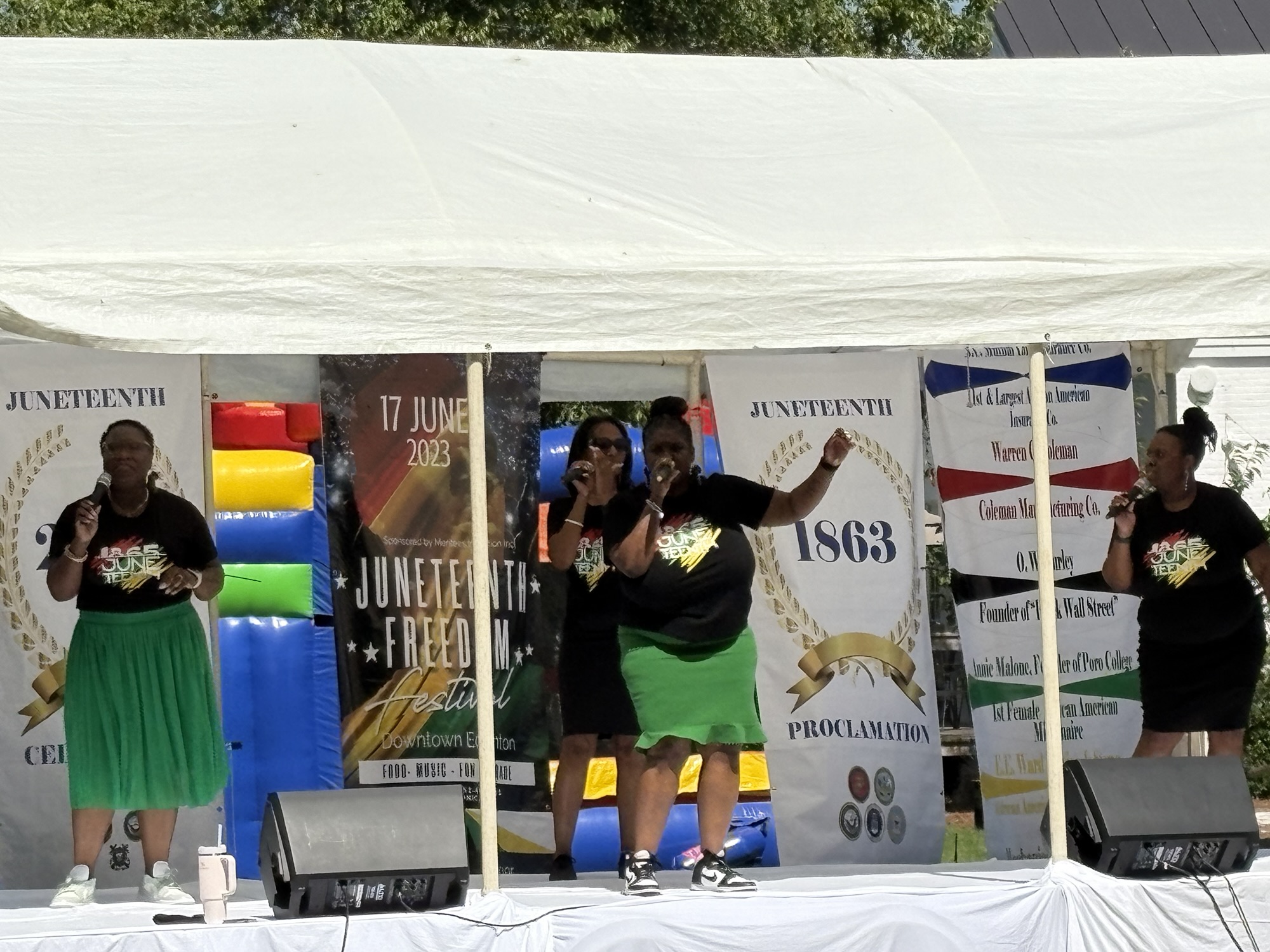
Special trolley tours offered attendees a chance to explore local African American heritage sites, while gospel group Kingdom, from Elizabeth City, ministered through music with a concert that caused many to clap in celebration.
The event included many food vendors, designated prayer and health tents, arts and craft vendors, local organizations and more.
One highlight of the program was a dramatic skit that featured the history of Juneteenth. In a fictional exchange at a train station during 1865, characters discussed the delayed spread of news that enslaved people in Texas were free — more than two years after the Emancipation Proclamation was signed in 1863. The skit recounted how Union General Gordon Granger arrived in Galveston in June 1865 to declare freedom for over 250,000 enslaved people.
Side note: While the 13th Amendment officially ended slavery in December 1865, slavery was still practiced by some native tribes. Indian territory was not under the “jurisdiction” of the United States law as the term was understood in the 1860s, according to a study by Marquette University.
Slavery in the continental United States came to an end as a legal institution on June 14, 1866, when the Creek Tribe agreed to abandon African-American slavery. The agreement was made the day after Congress approved the 14th Amendment.
The performance also highlighted the resilience of newly freed African Americans, who rebuilt their lives by reuniting families, founding schools and churches, starting businesses, and even seeking legal recourse for past wrongs.
“We celebrate it today because it’s about healing — for the people and for the nation,” one of the actors proclaimed, concluding with the famous reminder, “No one is free until we all are free.”
From heartfelt words to historical reflection and joyful performances, Edenton’s Juneteenth celebration embodied the spirit of CHEER. As White reminded attendees, “Celebrate, honor, energize, educate, and remember — because we have something to do with this thing.”
Note: We will include a video of the celebration as soon as we finish working on it.


