By Miles Layton
Random thoughts on a Saturday morning…
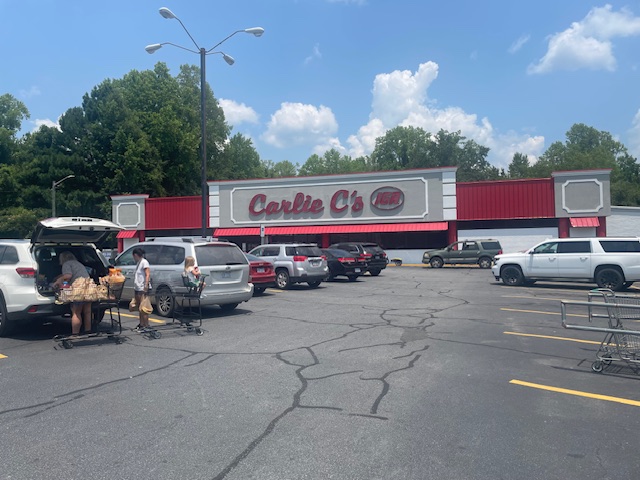
Feels like the Carlie C’s grocery store deal was put together by politicians, not bankers. The more I look at the proposed agreement, the more I wonder whether anyone has given it the scrutiny my mother would have demanded before signing on the dotted line.
My mother was a longtime accountant, so she always kept an eye on the bottom line. Like a lawyer cross-examining a client, she could tear apart a contract when she was intent on finding answers, especially to this question: How much is it going to cost?
In this case, the answer could be $1 million in taxpayer money.
I think we’d all like another grocery store in Edenton. Competition is good. More choices are good. And if Carlie C’s can bring more jobs and affordable groceries to town, I’m all for it.
But wanting something and knowing whether it’s a sound investment are two different things.
The Town of Edenton and Chowan County are considering subsidizing this venture to the tune of $1 million, split $500,000 apiece and paid over five years at a total of $200,000 annually.
Town officials describe their work so far as a good-faith effort to show the company they’ll do what’s needed to make this project happen. Town Manager Corey Gooden even said during a public meeting that the Town doesn’t need the County to make the plan possible.
OK…!?
That makes the County look like it’s holding up something everyone dreams of, when its officials are simply asking questions grounded in financial reality.
And reality hasn’t always been kind around here.
The Town and County have been burned before by outside businesses offering the moon and never delivering. Daedalus Yachts comes to mind, with its state grant and promises that went unfulfilled. Add the Hotel Hinton, Beechwood Apartments and Fairfield Inn to the list of grand visions that haven’t materialized as promised. Sandcastles built in the sky.
To see a draft of the Town’s contract with Carlie C’s, incentives, etc. — see end of story.
Who’s really on the hook?
There’s a wrinkle in how this deal works: two separate documents.
The first is the incentives agreement between the Town and the company. Gooden confirms it has been signed, with no changes or updates.
The second is an interlocal agreement between the Town and the County that would determine the County’s participation. It isn’t final. Gooden says the Town has reviewed the County’s draft and sent revisions to the County’s attorney.
Why two documents? Gooden says it’s structured that way for county legal provisions. State law limits the County’s ability to contract directly with a retailer for this kind of incentive, so the County would pay the Town, and the Town would pay the company.
Economic development… blah, blah, blah. I get it.
But here’s where things get interesting.
The agreement commits the Town to annual payments of as much as $200,000, or $1 million over five years. It says those payments may come from “the Town’s General Fund or from any other source not prohibited by law.” The County appears in the document only as a recipient of tax payments, not as a funder, and nothing makes the Town’s obligation depend on the County reimbursing it.
If the County never signs an interlocal agreement, then what? Would the Town be responsible for the entire amount?
That’s not pocket change, so taxpayers deserve to know exactly where the money will come from.
I’m no lawyer, but there’s also a curious provision limiting annual payments to 25% of something called the “Town’s Net Operating Income.”
What exactly is that?
Net operating income is a term familiar to people who own rental properties or operate businesses. It isn’t a standard measure of municipal government revenue. The agreement doesn’t define it.
It gets curiouser. The Town’s own Retail Incentive Policy, on the Council’s July 14 agenda, uses the same NOI language in one paragraph. Then it gives a different formula in the next: 25% of the company’s annual sales and use tax plus its annual utility charge. The agreement doesn’t use that formula at all.
Which one governs? Does NOI mean new tax revenue from the store? General Fund revenue? Utility revenue? Something else?
If you’re going to tie public payments to a financial formula, shouldn’t everyone know what the formula means?
My mother would have circled that phrase in red ink and demanded an explanation.
Show me the money
County leaders have said a taxpayer investment of this size should come with reasonable safeguards. State economic development grants commonly require measurable commitments: a certain amount of investment, a certain number of jobs, wage levels and a business operating for a specified period.
Seems pretty reasonable, right?
The County has been looking at whether tax revenue generated by the project could offset its share of the investment. There are three possible sources.
Real estate taxes are relatively straightforward because the County assesses and collects them. Business personal property taxes are also measurable because businesses file annual returns that can be audited.
Sales taxes are another matter.
Retailers remit sales taxes to the North Carolina Department of Revenue, which distributes money to counties through a system that doesn’t identify how much each individual merchant contributed. That means Chowan County cannot simply look at its monthly sales tax distribution and determine how much came from Carlie C’s.
This appears to be the major sticking point in negotiations.
But is it an impossible problem? Not necessarily.
One possible solution would be to require the company to provide independent verification of its store-specific sales. That could involve copies of its North Carolina sales and use tax returns, along with an appropriate taxpayer confidentiality waiver. Another option would be an annual report prepared by an independent certified public accountant using agreed-upon procedures to verify gross taxable sales at the Edenton location.
Either approach would need review by the County’s attorney to determine what’s legally permissible and whether the information would actually establish the revenue needed for the agreement.
But at least there would be something measurable.
And here’s the part that stopped me cold: the incentives agreement doesn’t require any reporting at all. Nothing obligates the company to hand over sales tax returns, payroll records or job counts, and nothing gives the Town or the County an audit right. The Town would be paying out public money on the honor system. WTF!
If you were a banker lending somebody $1 million, would you accept that?
I wouldn’t.
A promise isn’t a guarantee
The agreement says the company anticipates investing at least $4 million over five years and that its tenants will create “a substantial number” of full-time jobs.
Sounds wonderful.
But look a little closer. Oh my God, or as the kids text, OMG!
The jobs and wages language, including pay at or above the median wage, appears only in the “whereas” recitals that justify the deal under North Carolina law. The actual obligations in Section 2 require renovating, making the capital investment, paying property taxes, opening for business and buying utilities from the Town. They don’t require a single job, a minimum wage or an annual payroll report.
How many people must be hired? How much must they earn? How long must those jobs exist?
Those aren’t unreasonable questions when public money is involved. They’re especially fair because the Town’s own Retail Incentive Policy says incentive agreements will include benchmarks, clawback provisions and job expectations at or above the Chowan County median wage. The policy also calls for the applicant to put up at least 10% of project costs in equity. The June 9 Council minutes said incentives “would be performance based and tied to measurable benchmarks.” I don’t see those benchmarks in this contract.
And here’s another question: How long must the store stay open?
The contract requires the business to open within three years. It doesn’t appear to require continuous operation afterward, though we know it’s probably not going to close; we hope. Having lived in Appalachia, grocery stores never go out of business… eye rolling…
In theory, though, the store could open, receive an incentive payment and later close or substantially reduce operations without violating a specific requirement to remain open.
The Town could stop future payments under some circumstances, but getting back money already paid is another matter.
Maybe I’m overthinking this, but the agreement provides for recapturing previous payments only when the company fails to pay property taxes or make the capital investment. It doesn’t establish the same protection if the business closes early, fails to create the anticipated jobs or stops using Town utilities. Even the recapture language is odd, since payments don’t begin until the investment is complete.
Imagine paying someone to build a house, only to discover the contract doesn’t require the roof to stay on after the final inspection.
There’s also an oddity in the construction provisions. One section lets the company terminate the agreement if renovations aren’t begun or completed within three years. The Town does have its own termination right if the company fails to make the investment, pay taxes or open within three years, after notice and a 60-day cure period. But that’s not the same as the company’s walk-away option, and it’s fair to ask whether the Town, which is putting public money into the project, deserves the same flexibility.
The agreement also contains conflicting timelines. The recitals contemplate five years for the $4 million investment, while Section 2 requires the investment and opening within three years.
Which is it? My mother would have asked that question, too.
Who owns what?
Then there’s the property itself.
The agreement says the company “is the owner of” the parcel identified as 781513044384 and has operated the shopping center on it “for many years.” But as of this point in time, the property is not owned by Carlie C’s.
That’s a problem. Maybe I’m overthinking this: a contract shouldn’t state something as fact that isn’t fact. If a purchase is still to come, the agreement should say so and say when it’s expected.
The Town’s own Retail Incentive Policy does allow some flexibility. It says the applicant must own the real property, or at least the business fixtures and equipment, at the time of the application, “or become such within a time frame after completion of the project agreeable to the Town.” But the agreement doesn’t set any such timeframe or make ownership a condition of payment. Nothing in it requires the company to ever close on the property.
That matters because of what’s being built. Are we really talking about a company spending millions renovating a building it doesn’t own, and may never own, for a grocery operation that could last five years, less than five years or hopefully much longer?
For me, that’s an eye-rolling WTF moment. We’re not talking about a renter painting a bedroom shocking pink or planting a garden. We’re talking about major improvements designed specifically for a grocery store. Before committing taxpayer money, I’d like to understand who owns those improvements, who benefits from them if the grocery store closes and whether the public gets anything back.
And if the landlord owns the building and the grocer operates the store, which one is responsible when something goes wrong — perhaps the Iranians hack the freezer systems, causing the store to lose all that ice cream?
Read the fine print
The more you read, the more questions emerge.
There’s North Carolina’s pre-audit requirement. I wonder if that’s been handled. Really, you can’t use government-issued toilet paper to wipe your butt the morning after Taco Tuesday without that expense line item appearing on a proper audit.
Under N.C. General Statute 159-28, contracts involving the expenditure of public money are subject to specific fiscal controls. The agreement has a pre-audit certification line for the Finance Director, which is good. But the agreement doesn’t make future payments contingent on annual appropriations. Failing to satisfy the applicable requirements can render a contract invalid, and that’s not something to discover after the first check clears.
Here’s something else that caught my eye.
The agreement allows the company to assign its rights, including the right to receive payments, to an affiliate, a future owner of the property or a lender with notice to the Town but without the Town’s consent. In other words, the company could sell the property, and the right to receive taxpayer-supported payments could follow it to another owner.
To be fair, assignees remain subject to the Town’s defenses and the company’s duties. But who is that new owner? What experience does that company have? Will it operate a grocery store? Shouldn’t Town Council have a say before public incentives are transferred to someone else?
For any assignment that does require consent, the agreement lets the Town Manager approve it without Council action. Whether that authority can be delegated in this manner under the economic development provisions of N.C. General Statute 158-7.1 deserves a careful legal review.
Public money should not become a transferable perk without appropriate public oversight.
And what happens when things go wrong?
The agreement contains provisions for defaults, notices and opportunities to correct problems. Generally, when the company fails to meet certain obligations, the Town must provide notice and allow 60 days to correct the problem before exercising its remedies.
But even that process raises questions.
The notice provision refers to “the address of each party within Chowan County” without actually identifying an address. What happens if the company is headquartered elsewhere? What if the notice goes to the wrong place?
There’s also a severability provision that begins by saying the agreement “shall not be severable,” then proceeds with language suggesting the opposite. Which interpretation is intended?
The agreement doesn’t appear to require the company to defend or indemnify the Town against third-party claims involving construction liens, property damage or personal injuries arising from the project. It doesn’t require insurance either. And two clauses limit what the Town could recover: one waives consequential and similar damages, and another bars claims against the company’s officers, owners and affiliates personally. If someone gets hurt or a contractor isn’t paid, what protections does the Town have?
Those are the sorts of questions people hope never become important.
Until they do.
Then there’s the confidentiality provision. It restricts disclosure of the agreement’s terms “except as required by law,” and that carve-out matters, because North Carolina’s Public Records Act generally makes executed economic development agreements public records. Still, a public body shouldn’t be signing a confidentiality clause that invites the question. A private company’s desire for confidentiality doesn’t override state law.
And here’s one of the most important provisions of all: the merger clause.
Section 15 essentially says the written agreement replaces prior negotiations and understandings. That means promises made during presentations, conversations or public meetings about jobs, store size, wages, financial contributions or other commitments may mean very little if they aren’t actually incorporated into the signed agreement.
What does reasonable mean?
My mother would have had a cow over another line in the agreement.
The Town says it has calculated that it will recover its investment “within a reasonable period of time.”
Define reasonable. Five years? Ten? Twenty?
If you miss a car or mortgage payment and promise to catch up within a reasonable amount of time, the bank might have something to say about that. Think Lizard Lick Towing, the repo show based out of a wide spot in the road in Wake County. Entertaining show. Not quite as entertaining when it’s your own vehicle being hauled away.
The Town also has determined that the benefits it expects from the project will equal or exceed the incentives. Those anticipated benefits include property tax revenue, capital investment, sales tax revenue associated with construction and operation, and new full-time jobs.
That’s nice. But prove it.
Show taxpayers the calculations. Explain the assumptions. Identify what happens if the projections don’t materialize.
Wishful thinking is not a business plan.
Grocery stores aren’t charities
One argument for the incentive is that local government needs to provide a financial safety net while the store establishes itself.
Fair enough. Grocery profit margins are small, and the upfront investment is substantial.
But if grocery stores were such a terrible investment, North Carolina’s very own Food Lion, now owned by a Dutch company, wouldn’t have grown into a multistate powerhouse. Remember those old commercials with Food Lion President Tom Smith when the Salisbury-based chain was coming into its own? Founder Ralph Ketner was one of my heroes. He talked about cutting costs to keep prices low, and he taught me to turn off the lights and bag my own groceries.
The numbers may work for Carlie C’s. They may not. It’s difficult to know because the company is privately owned and understandably doesn’t want to reveal sensitive financial information to competitors.
But protecting proprietary information and providing accountability for public subsidies aren’t mutually exclusive. A carefully structured agreement could protect confidential business information while allowing independent verification of performance. Without that, we’re left with projections and marketing studies that may or may not reflect what actually happens.
Perhaps some projections are based on Food Lion’s performance in Edenton. That store seems to do pretty well. Maybe there’s enough business for two grocery stores. Maybe not.
And if Edenton is such an attractive grocery market, why haven’t more chains invested here before? Part of the answer involves Food Lion’s complicated history at Edenton Village Shopping Center, where it leased a prime location that might otherwise have attracted a competitor. Don’t hate the player, hate the game. The building has since been improved, and circumstances have changed.
But the central question remains: What measurable evidence supports putting $1 million of public money into this venture? Economic development; I get it, but…
One last thing
None of these questions means Carlie C’s is a bad company or that the project shouldn’t happen. They mean the agreement needs work.
And some of the problems may stem from using a contract drafted primarily for the private company’s interests, and adapted from somewhere else, rather than one built around the legal, financial and accountability requirements of local government. That’s not necessarily sinister. Businesses negotiate to protect themselves.
Our elected officials are supposed to negotiate to protect us.
As of this writing, the Town and County are still working through the agreement. That’s a good thing. There’s time to fix unclear provisions, establish measurable performance requirements, verify financial results and make sure taxpayer money is protected.
I want Carlie C’s to succeed. I want more grocery choices in Edenton, more jobs and more reasons for people to shop locally. I’m optimistic the store could do well.
But optimism doesn’t pay the bills.
When I was in high school, I desperately wanted my parents to buy me a Datsun 280ZX. Beautiful car. I could already imagine myself driving it around town. But my parents understood something I didn’t want to hear. A bag boy’s salary wasn’t going to cover the payments, insurance and maintenance if my hours got cut or I couldn’t find a job while attending college.
Wanting the car didn’t make it affordable.
And wanting another grocery store doesn’t automatically make a million-dollar subsidy a sound investment.
Before the Town and County sign anything, write it in stone, somebody needs to sit down with that contract, sharpen a pencil and ask the question my mother always asked.
How much is it really going to cost?
And this time, let’s make sure we can prove the answer.

Let us know what you think by leaving a comment. Comments are subject to approval.