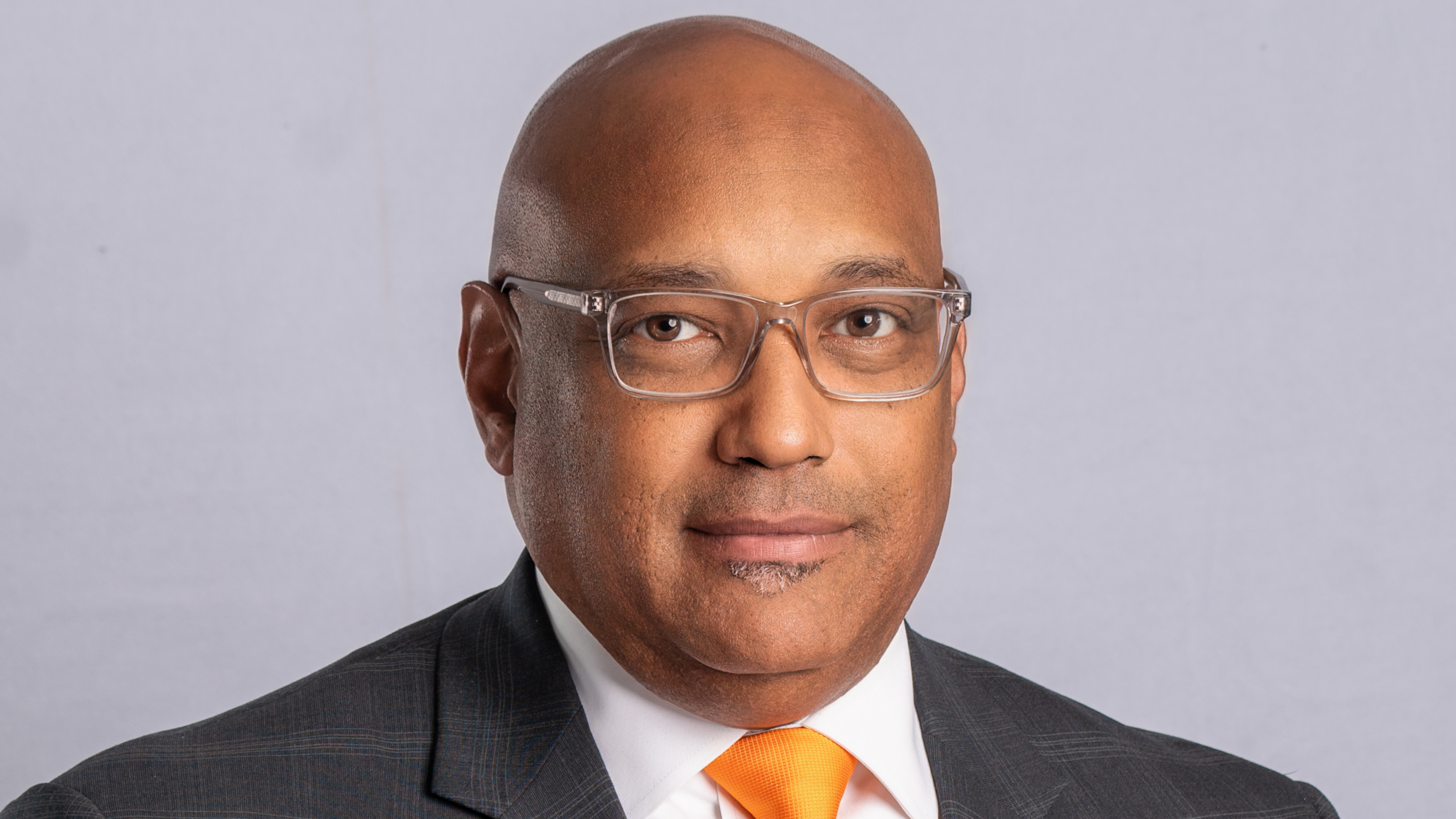
Op-Ed: By Dr. David O. White, Superintendent, Washington County Schools
In recent weeks, our community has been shaken by acts of violence that have touched far too close to home. As Superintendent of Washington County Schools, I want to be clear: what we are experiencing is not simply a school problem—it is a community problem that has made its way into our schools.
Our schools reflect the communities they serve. When conflict, division, and violence exist in the broader community, they do not stop at the schoolhouse doors. They follow our children into classrooms, hallways, and athletic fields. While we are committed to maintaining safe and orderly schools, we must acknowledge a difficult truth: schools alone cannot fix what is rooted in the community. It is also important to say this plainly: we must stop placing blame solely on our schools for the violence we are seeing.
The incidents that occur on school campuses are not created within the walls of our buildings—they are a byproduct of challenges that exist in the community. Holding schools responsible for issues that originate beyond their control distracts us from addressing the real problem. If we are serious about change, it will require all of us. For too long, there has been an unspoken hope that someone else would step in to solve this problem—that law enforcement, the school system, or a single agency could carry the burden alone.
That hope has not produced results, and it will not produce results moving forward.
The responsibility belongs to all of us—parents, elected officials, business owners, faith leaders, community advocates, and concerned citizens. We must come together with urgency and purpose to confront what is happening in our neighborhoods.
We must have honest conversations, hold one another accountable, and create real solutions that address the root causes of violence. This includes mentorship, economic opportunity, conflict resolution, and a renewed commitment to guiding our young people in a different direction. At the same time, we must be unwavering in one expectation: our schools must remain safe places for teaching and learning. Children deserve to walk into school free from fear.
They deserve classrooms where their focus is on learning, growing, and preparing for their futures—not on navigating the presence or threat of violence. To those in our community who may be connected to or influenced by gang activity, I say this directly: keep it out of our schools. Our children should not bear the consequences of adult decisions. If we fail to act, the consequences will be devastating.
We will continue to lose our young people—not only to violence, but to incarceration, lost opportunities, and unrealized potential.
Every child in Washington County deserves a chance to succeed, and we cannot allow that future to be taken from them. This is a defining moment for our community.
We can no longer afford to look the other way or wait for someone else to fix the problem. It is time to come together, take responsibility, and do the hard work necessary to protect our children and secure a better future.
The question is not whether something can be done. The question is whether we have the collective will to do it—together.
Editor’s NOTE: Op-Ed originally appeared in the Roanoke Beacon, Northeast North Carolina’s hometown newspaper.
When local governments fail, the state cannot look away
By Craig Reynolds
What has recently unfolded across Charlotte and Mecklenburg County is not a series of isolated breakdowns, but a pattern of institutional underperformance, from the federally scrutinized safety failures within the Charlotte Area Transit System; to administrative dysfunction within Charlotte-Mecklenburg Schools; to a housing market that remains structurally inaccessible to working families; to public safety failures that are no longer sporadic but recurring; and to governance lapses that would, in a competitive political environment, provoke immediate correction. Instead, too often, local governments in North Carolina have watched these failures dissipate without much consequence.
At its core, a constitutional republic has some very basic responsibilities. Keep people safe, spend taxpayer dollars responsibly, and tell the truth, even when that truth is uncomfortable. When the government starts treating those duties like optional suggestions instead of obligations, it is not a policy disagreement. Instead, it is a credibility problem.
We have always understood that the government should be limited. But limited does not mean absent and it does not mean asleep at the wheel. There is a difference between restraint and neglect, and too often in modern society those lines are getting blurred. When leaders choose convenience over responsibility, what we get is not more freedom; what we get is dysfunction.
Freedom and order depend on competence and institutions that actually work, that actually protect, that actually manage resources wisely, and that actually level with the public. Once that breaks down, public trust goes right along with it. So the question in front of us is simple: Are the people entrusted with governing are living up to the basic principles that make the system work at all? And that is not an ideological question. That is a matter of accountability and, frankly, of constitutional responsibility.
North Carolina is not structured as a loose collection of independent local governments, but instead operates under a system in which local authority flows from the state. And that structure carries with it both power and duty. The General Assembly possesses the ability to intervene when local systems fail, and it also carries the responsibility to act when those failures become persistent, visible, and harmful to the public. If the General Assembly declines to act when local governments repeatedly fail in this manner, the consequences will not remain confined to Charlotte or Mecklenburg County but will metastasize statewide, normalizing a standard of governance in which persistent underperformance carries no corrective mechanism and no meaningful accountability.
History teaches us something pretty simple: Incentives drive behavior. If there are no meaningful consequences, we should not be surprised when nothing improves. In fact, we should expect the opposite; we should expect failure after failure. In Charlotte and Mecklenburg County, this is exactly where we find ourselves and it is only getting worse. Poor performance has not led to correction, and instead leadership turnover gets brushed off with vague explanations and investigations come and go without any real resolution. The message this sends is that failure is perfectly acceptable and there is no real cost to those who are committing those failures.
The path forward does not require some sweeping ideological overhaul, but it does demand a return to fundamentals that should never have been in question. The government must operate with real transparency, not curated disclosures that obscure more than they reveal; and it must communicate with the public in a manner that is direct, timely, and complete. Just as importantly, it must accept oversight as a condition of public trust, not resist it as an inconvenience. This is a point underscored by the recent efforts of state Rep. Brenden Jones and his oversight committee to hold Garry McFadden accountable, which, regardless of one’s view of the particulars, serves as a reminder that oversight is not an intrusion into governance, but an essential component of it.
The General Assembly should implement clear, enforceable measures. Here are a few of my own suggestions:
First, amend the Public Records Act to require a 10 business day initial response, ongoing rolling production, and penalties with fee shifting for noncompliance. This should replace its current “as promptly as possible” mandate, because a standard that lacks deadlines and consequences allows agencies to delay, redact, or withhold information in ways that render transparency optional rather than real.
Second, establish independent, state-appointed review boards, similar to the North Carolina Local Government Commission, with authority to audit entities like the Charlotte Area Transit System and Charlotte-Mecklenburg Schools, issue binding corrective plans, and assume limited control of failing functions when benchmarks are missed, because agencies cannot be expected to meaningfully correct themselves when they are both the subject of review and the final decision-maker on whether change is necessary.
Third, require real time public dashboards, similar to those maintained by the North Carolina State Auditor, but focused on metrics involving crime, transit safety, school performance, and housing data so residents see the same information as policymakers. Because when data is delayed, fragmented, or selectively presented, it enables narrative management instead of honest accountability.
Fourth, tie state funding to measurable performance, with automatic withholding or reallocation for repeated failure, similar to that of Session Law 2023-59. Because funding without consequences allows underperformance to persist indefinitely with no incentive to improve.
Finally, mandate public reporting when leaders exit under scrutiny, including written explanations and disclosure of active investigations, to prevent quiet resets of accountability. Because leadership turnover without transparency allows systemic failures to be obscured rather than addressed.
None of these measures should be mistaken for overreach or novelty. They are straightforward expressions of accountability and responsible governance. The aim is not to supplant local control, but to ensure that it operates with consistency, competence, and transparency. When local authority is exercised without those guardrails, it ceases to serve the public and instead erodes confidence in the system itself. Restoring that confidence requires nothing more, and nothing less, than insisting that government at every level meets the standards it is entrusted to uphold.
Op-Ed originally appeared in Carolina Journal.
One response to “This Is a Community Problem—And It Requires a Community Solution”
Get better teachers that can relate and understand the children they dealing with…..foreigner or immigrants that doesn’t have the knowledge 💯 and culture of black children will never work…..Those folks cannot educate our children Take a look at other surroundings towns are they going through the same. Also the criminals activities going on the Sheriff need to call in the national guards until he put qualified deputies and policemen in place, Also the parents need to be allowed to come out and volunteer and see were the disconnect