By Nicole Bowman-Layton
Part 1 of 2: This story focuses on the county’s proposed regional water treatment plant. Read Part 2 for other actions from Monday’s meeting, including Swain Auditorium and tax issues.
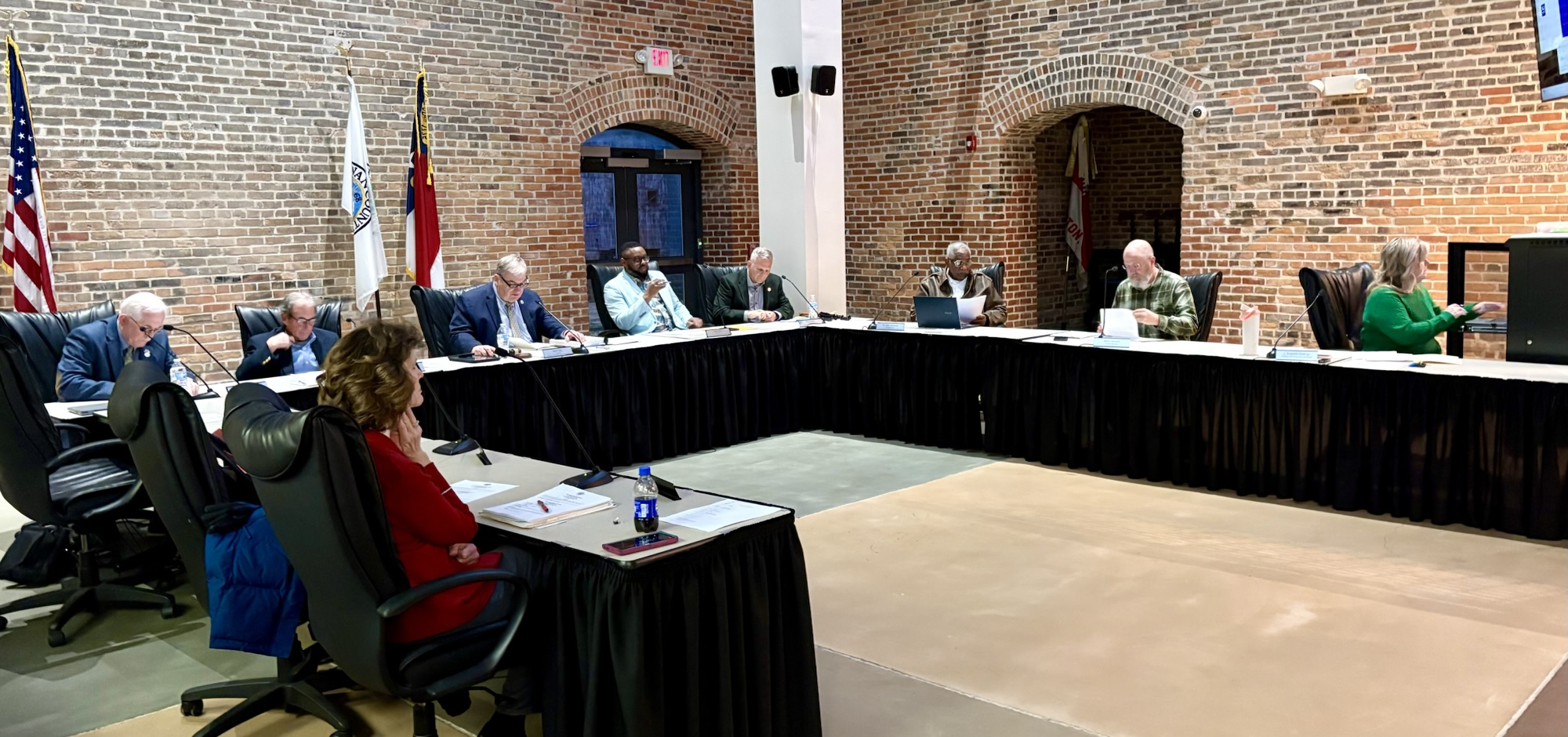
EDENTON — Chowan County commissioners on Monday, April 6, 2026, received an update on a long-planned regional water treatment plant — a project officials say is intended to address water quality issues residents continue to experience.
During the meeting, County Manager Kevin Howard briefed the board on progress toward a reverse osmosis (RO) treatment facility, outlining design changes, funding developments and a timeline that could stretch to the end of the decade. The information came from a report from a presentation Rivers and Associates Inc. made at the Feb. 25, 2026 planning retreat, Howard said. A link to the minutes of that retreat appears later in this article.
Commissioners asked questions but took no formal action.
The project has been in development for years, predating the Albemarle Observer. This reporter remembers covering early designs that included using water from the Chowan River.
Periodically, residents post on social media about the color or smell of local water. Officials have long acknowledged that the water supply from the local aquifer is “hard,” meaning it contains a lot of natural chemicals and minerals that require significant chemical treatment.
Howard said the proposed RO system would mark a major shift.
“RO is much better than our current process,” he said. “It removes everything we cannot get out now.”
From local fix to regional system
Under the latest plan, the facility would serve:
- Chowan County
- The Town of Edenton
- Potentially Perquimans County
Those communities would purchase water from Chowan rather than share ownership.
“That’s going to help with the cost of the plant,” Howard said.
To meet projected demand, the county is considering expanding capacity to as much as 5 million gallons per day. The plant will be built on about 29 acres off Haughton Road.
Cost and funding
The project is expected to cost between $65 million and $70 million, though updated estimates are pending.
The county has secured $30 million in state funding and is seeking another $30 million. If both come through, officials say borrowing needs could be limited.
A long road ahead
Despite that progress, the timeline remains lengthy.
Howard said the plant likely would not be completed until around 2030, with a key uncertainty still ahead: State permitting for discharge into the Albemarle Sound.
That process could take up to two years.

How it would work
The system would draw brackish groundwater, filter it through reverse osmosis and add back necessary minerals before distribution. The saltwater byproduct would be piped into the Albemarle Sound, which is composed of salt water.
Early testing has shown better-than-expected results, with fewer treatment steps needed than originally anticipated, Howard said.
Earlier planning details show phased approach, system needs
Details from a Feb. 25, 2026, planning meeting add context to how the project is expected to develop.
Engineers said six test wells have already demonstrated sufficient capacity and water quality for the initial phase, with no need for complex treatment beyond standard pH adjustment and disinfection.
The plant is expected to be built in phases, with additional well sites added as demand grows or regional partners come online.
Engineers also outlined plans to discharge treated waste into the Albemarle Sound using a multi-port diffuser, with early modeling suggesting the system could meet permitting requirements.
The earlier presentation also made clear the new plant will not eliminate the need for near-term fixes to the existing system — particularly in areas such as Cape Colony, where upgrades must be completed before the RO facility comes online.
Those needs include additional sampling infrastructure, system flushing and staffing.
Officials also indicated future discussions may include water rate adjustments needed to qualify for certain state funding programs.
Commissioners approved an amendment Monday to shift the project’s financing strategy, allowing staff to pursue state funding rather than a federal loan.
Next steps include engineering work, permitting and continued discussions with regional partners.
The project remains one of the largest infrastructure efforts in the county’s history — and one officials say is necessary to address both past problems and future demand.
One response to “Chowan County Commissioners hear latest on regional water plant”
[…] 2 of 2: This story covers the remainder of Monday’s meeting. Read Part 1 for details on the county’s proposed regional water treatment […]