
By Nicole Bowman-Layton
EDENTON — The smallest volunteers at St. Paul’s Episcopal Church’s annual Rise Against Hunger meal-packing event needed a boost.

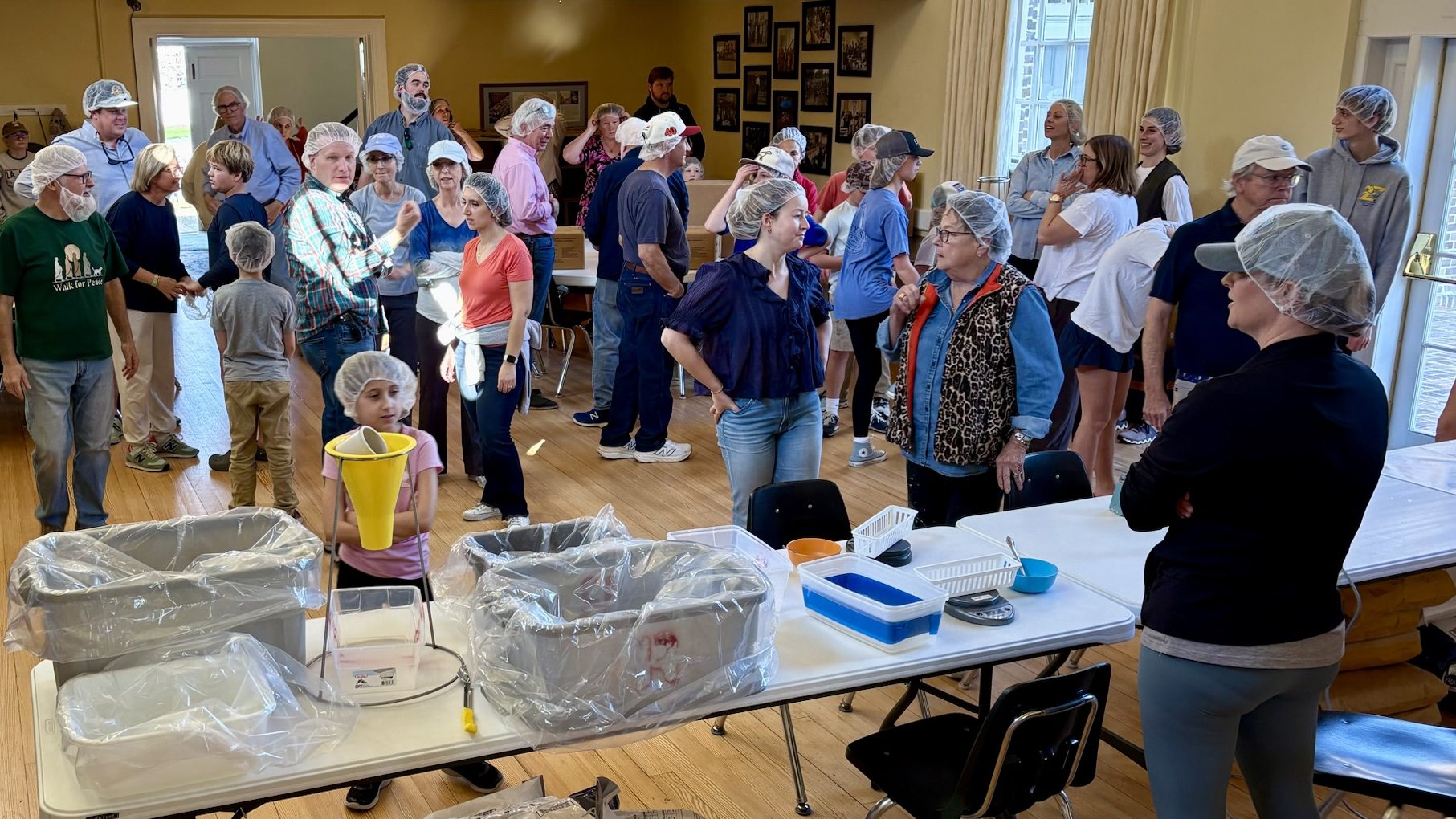
A few children stood on unopened bags of rice to reach their stations, gloved hands carefully using cups and ladles to pour ingredients into waiting funnels while music drifted across the parish hall on Sunday, March 1, 2026. Some neighboring adults tapped their feet to the rhythm. While others nodded along or swayed between the rows of tables, breaking up the repetition of the work with smiles and a few sing-alongs.
At least half a dozen families worked side by side — grandparents guiding grandchildren, parents steadying scales, siblings competing to see who could move fastest down the line.
For many, the annual event is one of their favorite days of the church year.

By the end of the afternoon, the group packed more than 12,000 meals — part of a 16-year partnership that has now produced approximately 250,000 meals for people facing hunger around the world.

About Rise Against Hunger
Rise Against Hunger is an international humanitarian organization working to end global hunger. The nonprofit coordinates meal-packing events across the United States and partners with schools and community organizations around the world to distribute food, support education initiatives and respond to disaster relief efforts.
For information or to host a meal-packing event, contact the Raleigh office at:
Website: riseagainsthunger.org
Phone: (919) 839-0689
A tradition that returns each year
What might appear to be a simple assembly line of rice and vitamin packets has become a fixture in the life of St. Paul’s.

The church has hosted the event annually for 16 years, welcoming volunteers of all ages into the work. This year, about 50 parishioners filled the parish hall.
Stations were arranged with careful precision. Volunteers sometimes rotated stations throughout the event, which was a little over two hours long — adding vitamin packets, scooping soy and dehydrated vegetables, measuring rice and weighing each bag to ensure it met required standards before sealing it shut. The steady sounds of hard plastic scooping ingredients and tape guns closing packed boxes punctuated the music playing in the background.
The rotation kept energy high and allowed everyone to experience different parts of the process. Children concentrated intently on filling cups and dumping them into funnels with bags at the end. Adults shifted in and out of stations as needed. When a bag came in underweight, it was adjusted and sent down the line.
The work is repetitive and also communal.
Families return year after year. Children grow taller. Some who once needed to stand on rice bags and kneel on chairs to reach the table now work comfortably at full height.
Local hands, global reach
The meals packed in Edenton will be distributed through Rise Against Hunger’s global network of partners. The nonprofit focuses largely on school feeding initiatives overseas, where consistent access to nutritious meals can improve attendance and classroom performance.
While most meals are distributed internationally, the organization also supports disaster relief efforts within the United States. Following Hurricane Helene, supplies, including meal packages, were sent to western North Carolina as part of broader recovery efforts.
For St. Paul’s parishioners, that global and domestic reach reinforces why the event continues. Though those who pack the meals may never see where they land, they understand the purpose behind the work.
Throughout the event, sealed packets were boxed — 36 to a carton — and placed on pallets for transport to begin their journey beyond Edenton.
As clean-up began, volunteers peeled off gloves and brushed rice from tables to the floor where it was swept up for disposal. The music faded. The plastic bins, scales and sealers were placed back in their storage containers. Another year of the tradition was complete.
Next year, many of the youngest volunteers will return a little taller. The line will form again. And St. Paul’s will continue a ritual it has repeated for 16 years — measuring, sealing and sending meals into the wider world.


