By Nicole Bowman-Layton
In towns across northeastern North Carolina, you don’t have to look far to find a memorial.
They stand near courthouses, near that lone tree in a freshly ploughed field, and beside winding back roads. They’re etched into plaques at schools and mounted on the walls of American Legion halls. Names carved into stone. Names read aloud at ceremonies. Names that meant something to someone.

We understand that instinct here — the instinct to remember.
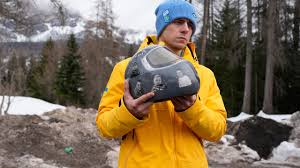
I was thinking about that recently when I read that Ukrainian skeleton athlete Vladyslav Heraskevych had been barred from Olympic competition because of what was on his helmet.
The helmet bore several paintings depicting 24 Ukrainian athletes who have died since Russia’s invasion of their country in 2022. They were friends. Competitors. Teammates. Young people who trained and dreamed as he does. Some also served their country as soldiers and paid the ultimate sacrifice.
The Olympics, of course, are built on the idea of neutrality. The Games are meant to rise above politics, to bring nations together under a shared set of rules. Officials determined the helmet crossed a line.
And maybe from a certain altitude — far above the grief and the rubble — that makes sense.
But altitude has a way of smoothing out the details.
I met Vladyslav, his father/coach Mykhailo Heraskevych in March of 2024 when they visited Athens, Ohio. They were preparing to compete in Lake Placid, and Athens had become a place he knew as a partner community. A local organization had been collecting humanitarian aid and sending it to Ukraine. Vladyslav and his father were among the people distributing that aid back home.
They didn’t arrive like celebrities. They were humble. Soft-spoken. Grateful. They even made us food and showed slides of what had been going on in the Ukraine.
They talked about using the Ukrainian bobsled team’s vans to deliver supplies — food, clothing, medical items — wherever they were needed. They talked about creating a camp for children whose lives had been upended by war, giving them a place to play, to breathe, to feel like kids again.
Some of those children have since gone on to compete internationally. One of them accompanied Vlad on his trip to Appalachian Ohio.
That’s what stayed with me. Not defiance. Not protest. Service.
A father and son used what they had to help the people around them.
Around here, that doesn’t sound radical. It sounds familiar.
After the recent snowstorm that dropped 17 inches on Tyrrell County — more than the county has seen since the 1960s — neighbors checked on neighbors. People with tractors cleared driveways for the elderly. Churches made calls. Folks shared generators and firewood.
No one issued a press release. They just showed up.
In hurricanes, we’ve seen the same thing. People from down the road bringing their chainsaws to clear fallen limbs. Pickup trucks hauling supplies. Volunteers cooking meals long after the outside crowds left.
There’s something distinctly rural about using whatever you have — a tractor, a van, a spare bedroom — and turning it into help for someone else.
That’s what I saw in that father and son from Ukraine.
So when I read about the helmet, I didn’t first think about international rules. I thought about names and photos.
What does it mean to carry the names of the dead?
In our part of the world, we understand that symbols can be complicated. Memorials mean different things to different people. History carries weight. Emotion runs deep.
But underneath all of that complexity is something simple: grief.
When someone we love dies — especially suddenly, especially violently — we look for ways to say they mattered. We engrave names. We plant trees. We stitch quilts. We wear bracelets. We gather once a year and read their names aloud so they continue to live.
We remember.
For someone who has seen war up close — who has delivered supplies into shattered communities, who has comforted children who have heard explosions — the images aren’t abstract. They aren’t geopolitical. They are personal.
At the same time, the Olympics exist in a fragile space. The Games are supposed to unify. They bring together nations that disagree on almost everything else. Officials draw lines to keep competition from becoming a billboard.
There’s tension there. Real tension.
When does remembrance become a statement? When does grief look like politics? Can institutions designed for neutrality accommodate personal expression without unraveling?
I don’t pretend to have answers.
What I know is this: The man I met did not strike me as someone chasing controversy. He struck me as someone carrying weight.
He and his father had used bobsled vans to haul humanitarian aid. They had created a camp so children could feel safe long enough to laugh. They had seen things most of us will only glimpse on a screen.
If you’ve walked through the wreckage of your hometown, if you’ve lost friends who once trained beside you, maybe the urge to carry their names doesn’t feel political at all.
Maybe it just feels necessary.
In northeastern North Carolina, we know something about honoring those who are gone. We stand for moments of silence at high school football games. We place flags beside headstones. We gather at the veterans park and bow our heads.
We also know that symbols can stir strong emotions. They can unify some and trouble others. They can hold layers of meaning that don’t fit neatly into rulebooks.
But beneath the debate, beneath the headlines, governing bodies, and official statements, there are still people.
A father. A son. Two dozen images of people who had dreams and families.
Maybe that’s what I hope readers hold onto.
Not whether the Olympic committee got it exactly right or exactly wrong. Not whether the helmet fit within the fine print.
But the image of a young athlete who has seen the worst of humanity still choosing to serve — still helping children play, still delivering supplies, still stepping onto the ice to compete.
And perhaps asking, in his own way, that the world remember.
Here at home, we understand that instinct.
We may not agree on every symbol or every decision. But we understand the desire to say: These lives mattered.
Sometimes that’s not a political statement.
Sometimes it’s simply human.
One response to “The faces on a helmet”
What an amazing story that we would not get from the main stream media! Thanks for sharing. This should go viral!