A 2019 speech reveals a pattern of revolutionary visions that never materialized
EDENTON, NC — Six years before Michael Reardon’s boat-building empire collapsed in a cascade of unpaid bills and evictions, he stood before a boating industry audience describing a revolutionary vision.

He was building an 80-foot yacht that would be “fully fossil free,” he said in a speech captured on video. It would manufacture hydrogen onboard using solar cells, wind energy, and technology adapted from the International Space Station. The vessel would use BMW i3 battery packs. He claimed to have developed “the only hydrogen tanks certified by DNV GL and DOD in the world.”
This story is the second installment of a two-part series. The first story gave a timeline of the recent developments of how Reardon’s vision of uniting America’s boatbuilding companies has fallen apart in five months.
This story looks at the vision vs. reality and questions the broken promises leave behind.
He was building an 80-foot yacht that would be “fully fossil free,” he said in a speech captured on video. It would manufacture hydrogen onboard using solar cells, wind energy, and technology adapted from the International Space Station. The vessel would use BMW i3 battery packs. He claimed to have developed “the only hydrogen tanks certified by DNV GL and DOD in the world.”
“What we’d like to do is get rid of Exxon, all those guys, and convert everyone to hydrogen,” Reardon told the 2019 audience.
That hydrogen yacht was supposed to launch in December 2020.
It never did.
The gap between Reardon’s vision and reality raises uncomfortable questions for everyone who believed in his latest venture.
Could anyone have seen this coming?
The 2019 Vision
The speech, delivered to a boating industry group and posted on YouTube in March 2019, showcased Reardon at his most ambitious. The video reveals someone fluent in cutting-edge technology, name-dropping prestigious partnerships, and painting a future where his innovations would transform the industry.
He described solar panels generating “upwards of 100 kilowatts” of power. He detailed partnerships with BMW for battery technology. He explained the proton exchange membrane process for hydrogen generation, noting it was the same system used on the International Space Station.
“After hounding them for 10 years, they’ve let me use it,” he said of the NASA technology.
He spoke of future plans for “additive manufacturing”—3D printing of boat components—and even “organic manufacturing” of boat structures, citing work by MIT researcher Neri Oxman.
The presentation had all the elements of a compelling pitch: advanced technology, environmental responsibility, prestigious partnerships, and a charismatic leader who understood both the technical details and the big-picture vision.
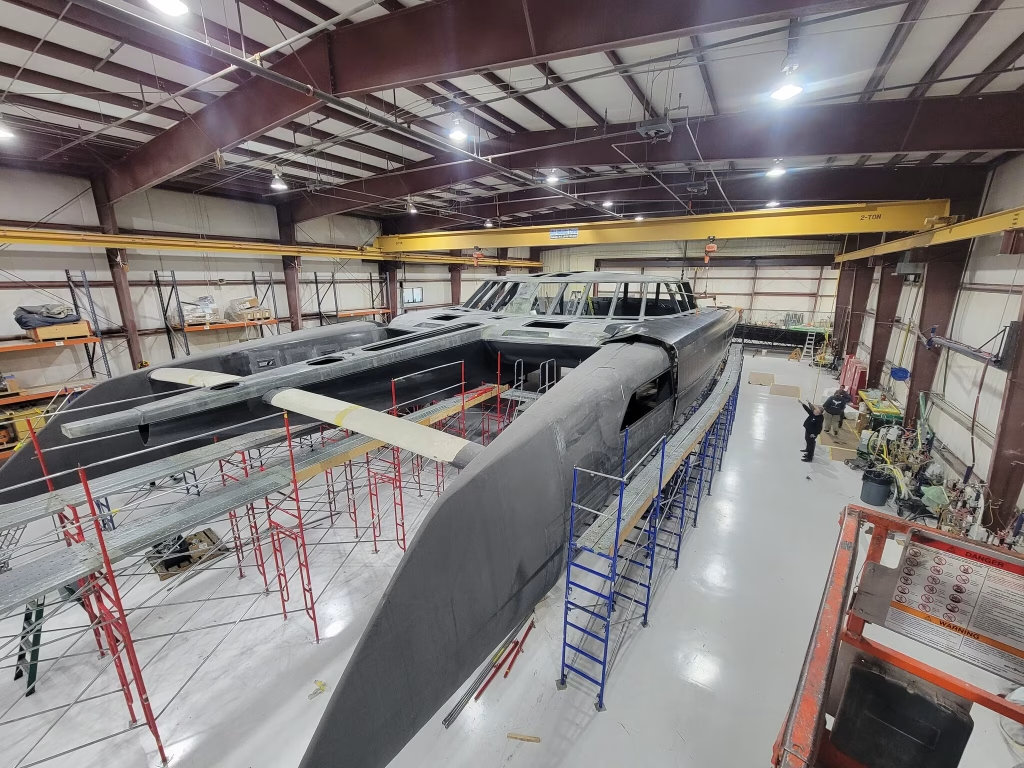
But six years later, there’s no evidence the hydrogen yacht was ever built. The Daedalus facility now for sale in Edenton shows a partially constructed catamaran, unfinished, with no apparent hydrogen power system, according to Colliers real estate listing photos. The images reveal no revolutionary technology—just an abandoned boat in an empty building.
The Gunboat Connection
The 2019 speech also confirmed something that had been unclear: Reardon’s connection to Gunboat, the high-performance catamaran manufacturer.
“We’ve gone through some horror shows with some other boat manufacturers over the years,” Reardon said in the video, referring to working with Gunboat. He mentioned a “spectacular capsize” and said the company was “relaunching in Annapolis” after coming “back stronger.”
Gunboat, formerly located in Wanchese, filed for bankruptcy protection in 2015. It was purchased by a European company and currently produces luxury catamarans at a facility in France.
The reference is revealing. Reardon was involved with Gunboat during troubled times, yet when he acquired Catalina Yachts in 2025, the boating press praised his experience without examining what that experience actually entailed. Had Gunboat thrived under his involvement, or had it struggled?
Reardon also mentioned in the speech being “bought out by Brunswick” at some earlier point and starting a company in Europe building carbon yachts. These ventures remain largely unexamined. Were they successful? If so, why did they end? If not, what went wrong?
The State’s Investment
The timeline between Reardon’s 2019 promises and North Carolina’s 2022 grant raises particularly troubling questions about due diligence.
2019: Reardon promises a hydrogen yacht launching in December 2020. The state awards him a $500,000 grant to create 50 jobs at Daedalus Composites, according to a North Carolina Department of Commerce announcement.
2020: December passes with no hydrogen yacht.
2022: Despite no evidence the hydrogen yacht was ever built, and with questions about whether the 2019 grant’s job-creation goals were met, the state awards Reardon another $500,000 grant, according to a Department of Commerce announcement. This one is for his subsidiary Hermes Marine to build 32-foot powerboats and create 136 jobs. The funds were never paid, as the projects never progressed.
2025: The Daedalus facility is for sale, according to the Colliers listing. Employees have been laid off. There’s no evidence Daedalus ever sold a boat, according to industry observers.
While the state did not give out any grant money, the timeline still raises questions. What did state officials know when they approved the second grant? Did they review whether the first grant’s job commitments had been met? Were they aware of the hydrogen yacht promises and their failure to materialize? Did they examine Reardon’s track record with previous ventures?
These aren’t abstract policy questions. They’re about accountability for $1 million in taxpayer money awarded to a businessperson whose pattern appears to be making grand promises that don’t materialize.
The Sellers’ Decision
The Butler family’s decision to sell Catalina to Reardon with deferred payment terms also invites scrutiny.
By May 2025, when the Catalina deal closed, Reardon’s pattern should have been apparent to anyone conducting due diligence:
- The 2019 hydrogen yacht promise had gone unfulfilled
- Daedalus had apparently not sold any boats despite years of operation and state funding
- His connection to Gunboat’s troubled period and bankruptcy was part of his history
- The European ventures he mentioned in 2019 would have been worth investigating
Yet California Catalina agreed to lease Reardon their manufacturing facility and defer $1 million of the purchase price, according to court documents. Why?
Were there other potential buyers for Catalina? What financial information did Reardon provide? What representations did he make about his ability to run the operation? Did the sellers know about the gap between his 2019 promises and reality?
The Butler family has not responded to requests for comment. The asset purchase agreement, which would shed light on these questions, is not public.
The Press’s Role
When Reardon acquired Catalina in May 2025, sailing publications praised his background with little apparent investigation of his actual track record.
The Albemarle Observer was among the online publications that ran press releases about the sale.
Sailing writer George Day described Daedalus as “a high-tech disrupter that creates all-carbon energy-efficient catamarans for mega millionaires,” contrasting it favorably with Catalina’s more conservative boats.
“No one mentioned that Daedalus apparently hadn’t sold a boat yet,” journalist Peter Swanson later wrote in Loose Cannon, reflecting on the coverage.
The boating press’s acceptance of Reardon’s credentials raises questions about journalism in specialized industries. Were reporters simply repeating information from press releases? Did anyone ask to see evidence of boats sold, customers served, or revenue generated? Did anyone investigate what happened to the hydrogen yacht?
In fairness, much of this information wasn’t readily available. But the pattern of promises without evidence of execution was there.
The Warning Signs
With hindsight, several red flags stand out:
The hydrogen yacht promise: A specific, detailed claim about a revolutionary product with a firm delivery date in the 2019 speech. It never materialized, yet Reardon continued making ambitious claims.
No evidence of sales: Despite years of operation and $1 million in state grants, Daedalus apparently never sold a boat, according to Sailing Scuttlebutt. For a manufacturing company, lack of sales is perhaps the most fundamental warning sign.
Acquiring companies with “a dollar down”: The August 2025 acquisitions of Tartan, Freedom, and AMP Spars for essentially no money upfront suggested either that Reardon had no capital, that sellers were desperate, or both.
Immediate furloughs at Tartan: Workers were sent home right after the acquisition, according to Sailing Scuttlebutt, suggesting there was no working capital to meet payroll.
Factoring in August: Selling accounts receivable at a discount is typically a sign of cash flow desperation, according to industry sources. Doing so while trying to run multiple boat companies suggests serious problems.
The rent default timeline: Stopping rent payments just one month after acquiring Catalina, according to court documents, indicates either a catastrophic immediate problem or that there was never a realistic plan for operating the business.
The investor story: Patrick Turner’s October explanation about an investor who wouldn’t commit, shown in a video obtained by Loose Cannon, came four months after Reardon had stopped paying rent. It appeared to be either misdirection or wishful thinking rather than the actual cause of the collapse.
Individually, some of these might be explainable. Together, they suggest a pattern: someone skilled at painting compelling visions but unable or unwilling to execute them.
The Unanswered Questions
The collapse of Reardon’s boat-building network leaves numerous questions that may only be answered through legal proceedings or more extensive investigative work:
About the hydrogen yacht:
- Did this project ever exist beyond presentations?
- Were there customers or investors who provided funding?
- What happened to any money raised for this project?
- Were the claimed partnerships and certifications legitimate?
About Daedalus operations:
- How did the company operate for years without apparent sales?
- Were job-creation commitments ever met?
- Are there customers who paid deposits for boats never delivered?
About the Catalina acquisition:
- Where did customer deposit money go?
- What was in the asset purchase agreement about existing deposits and accounts receivable?
- What representations did Reardon make to sellers about his finances?
- Why did sellers agree to deferred payment terms?
About the August acquisitions:
- How did Reardon convince sellers to accept “a dollar down”?
- What due diligence did Tartan, Freedom, and AMP Spars conduct?
- Did those sellers know about problems at Florida Catalina?
- Was this an attempt to find new cash sources to keep other operations afloat?
About current operations:
- What’s the real status at Tartan? Are workers being paid?
- Is Patrick Turner aware he’s potentially repeating the Catalina pattern?
- What’s happening at Freedom Yachts and AMP Spars?
About legal liability:
- Does this cross from civil debt into potential fraud?
- What recourse do customers have?
- Can workers recover unpaid wages?
- Are there criminal implications?
The Broader Questions
Beyond the specifics of Reardon’s ventures, this story raises uncomfortable questions about how business deals happen:
Due diligence: How much investigation should sellers, investors, and government agencies conduct? Is it enough to listen to an impressive presentation, or should they demand evidence of past performance?
Specialized press: Do industry publications sometimes become cheerleaders rather than skeptical journalists? When everyone in an industry knows everyone else, does that create reluctance to ask hard questions?
Pattern recognition: When someone has a history of ambitious projects that don’t materialize, how should that inform decisions about their next venture? Is it fair to deny opportunities based on past failures, or should each venture be evaluated independently?
The College of The Albemarle
One particularly poignant aspect of the Edenton story is the partnership with the College of The Albemarle.
In 2019, Daedalus announced a collaboration with the college’s Edenton-Chowan campus to train workers in advanced composite materials, according to Business North Carolina. This represented a meaningful commitment from an educational institution — developing curriculum, dedicating instructor time, and investing in equipment and facilities based on the expectation that Daedalus would provide sustained employment for graduates.
Whether the program advanced to actual instruction is unknown. It is noted that in response to the general need for skilled employees in the local maritime industry, COA now offers courses in painting boats, welding, and laser-cutting.
The Path Forward
Several legal and administrative processes will determine parts of what happens next:
The Florida lawsuit will establish how much Reardon owes California Catalina though collecting that judgment may prove difficult.
The factoring houses’ lawsuits will proceed separately.
Customer legal action, if it comes, could reveal what happened to deposits and who bears responsibility.
The fate of the boats themselves remains uncertain. Can the nine partially completed Catalinas be finished and delivered? Who has the legal right to complete them? Will customers ever receive the boats they paid for?
But the larger questions transcend these specific legal matters:
How do we distinguish between ambitious entrepreneurs who deserve support despite past setbacks and those whose pattern of unfulfilled promises should disqualify them from further opportunities?
What accountability mechanisms should exist for public funds awarded to private businesses?
How can customers, workers, and communities protect themselves when charismatic leaders paint compelling visions?
Support local journalism
Make a monthly donation
Make a yearly donation
Choose an amount
Or enter a custom amount
Your contribution is appreciated.
Your contribution is appreciated.
Your contribution is appreciated.
DonateDonate monthlyDonate yearlyThe Human Cost
It’s easy to get lost in the financial and legal complexities. But at the center of this story are real people who believed in Reardon’s vision:
Workers who showed up every day, building boats, some for as little as $16 an hour according to Sawnson’s articles, who went weeks without paychecks while being told an investor was coming.
Customers who saved for years to buy their dream sailboat, who made substantial deposits and waited excitedly for delivery, who now face potential loss of their money and their dreams.
Communities that believed promises of job creation and economic development, that invested public goodwill and taxpayer funds based on those promises.
Suppliers who extended credit to support boat production, who provided materials and components they’ll likely never be paid for.
The Butler family, who sold a company built over generations to someone they believed would continue its legacy.
These are the people left to pick up the pieces when grand visions collapse.
A Final Question
Perhaps the most important question isn’t about Michael Reardon specifically, but about the systems that enabled this situation:
If a pattern of ambitious promises without evidence of execution is visible—a 2019 hydrogen yacht that never materialized, years of operation without apparent sales, connections to troubled ventures—why wasn’t that pattern enough to give pause to sellers, economic development officials, and journalists?
The answer may be that we want to believe in transformation. We want to believe that the next venture will be different, that past struggles don’t predict future failure, that grand visions can become reality.
Sometimes they do. Sometimes ambitious entrepreneurs do revolutionize industries, and those who believed in them are vindicated.
But sometimes the pattern repeats. The promises don’t materialize. The grand vision remains just that—a vision.
And when that happens, someone has to ask: Could we have known? Should we have known? And what do we do differently next time?

5 responses to “Years Before the Collapse, Warning Signs: Michael Reardon’s History of Grand Promises”
Wow!
This is absolutely fascinating! The “due diligence” aspect, from private financial concerns for sure but governmental especially.
And what about Michael Reardon’s family? Wife, children? When personal dreams collapse what about the collateral damage to those family members who may have been his cheerleaders over the years?
Outstanding journalism, unlikely to be reported in such detail by local newspapers…especially with links to online sources. This is the future of local news reporting and should be supported with your contributions if you value true coverage of local news.
One unmentioned feature of the transaction between Catalina and Reardon is the federal lawsuit between between Catalina and two former employees who were promised a minimum of $1 million each upon sale of the company. It appears the sale to Reardon involved features to avoid having to pay out to these former employees. The transaction appears dodgy on both ends.
Great reporting. It seems Michael Alexander Reardon of Edenton NC may have been running several scams worth millions. Where is the state oversight? Is anyone looking at his taxes? Business taxes, payroll taxes, personal taxes? How much money did he pay himself through Daedalus Yachts while apparently NEVER BUILDING A SINGLE BOAT? Where did the money go? How did he run Daedalus in Edenton NC for 6 years (?) and apparently never build, complete, or deliver a single boat? Did he have other “investors”? Just wondering outload – How does money laundering work? Maybe someone can explain it to me.