BY NICOLE BOWMAN-LAYTON
More than 26,000 residents across 11 northeastern North Carolina counties — including nearly 2,400 in Chowan County — may lose access to their federal Supplemental Nutrition Assistance Program (SNAP) benefits Nov. 1, as the federal government shutdown drags into its fifth week.
The U.S. Department of Agriculture (USDA) has told states to pause November SNAP payments until further notice, saying federal appropriations have run out. Unless Congress, the courts, or the administration intervenes, 1.4 million North Carolinians, including 580,000 children, could see their benefits cut off starting tomorrow.
Federal Court Hears Emergency Lawsuit
A federal judge in Boston heard arguments Thursday, Oct. 30, 2025, in a lawsuit filed by 25 Democratic-led states — including North Carolina — seeking to force the USDA to use its $6 billion contingency fund to maintain SNAP payments during the shutdown.
Judge Indira Talwani appeared skeptical of the Trump administration’s position during the hearing, stating “it’s hard for me to understand how this is not an emergency” and suggesting the government should find “an equitable way of reducing benefits” rather than suspending all payments. The judge indicated she would issue a ruling later Thursday, though as of press time, no decision had been announced.
The Trump administration has maintained that contingency funds are “not legally available to cover regular benefits” and cannot be used without Congressional appropriation.
Local Impact
According to data from the N.C. Department of Health and Human Services (NCDHHS), SNAP enrollment in April 2025 included:
- Chowan County – 2,389 participants
- Bertie County – 3,977
- Gates County – 1,409
- Washington County – 2,687
- Tyrrell County – 554
- Camden County – 825
- Dare County – 2,364
- Hyde County – 752
- Perquimans County – 2,189
- Pasquotank County – 7,289
- Currituck County – 2,152
Together, that’s 26,587 local residents, many of them children, who depend on monthly SNAP benefits averaging $175 per person for groceries and basic nutrition.
Local Food Programs Brace for Impact
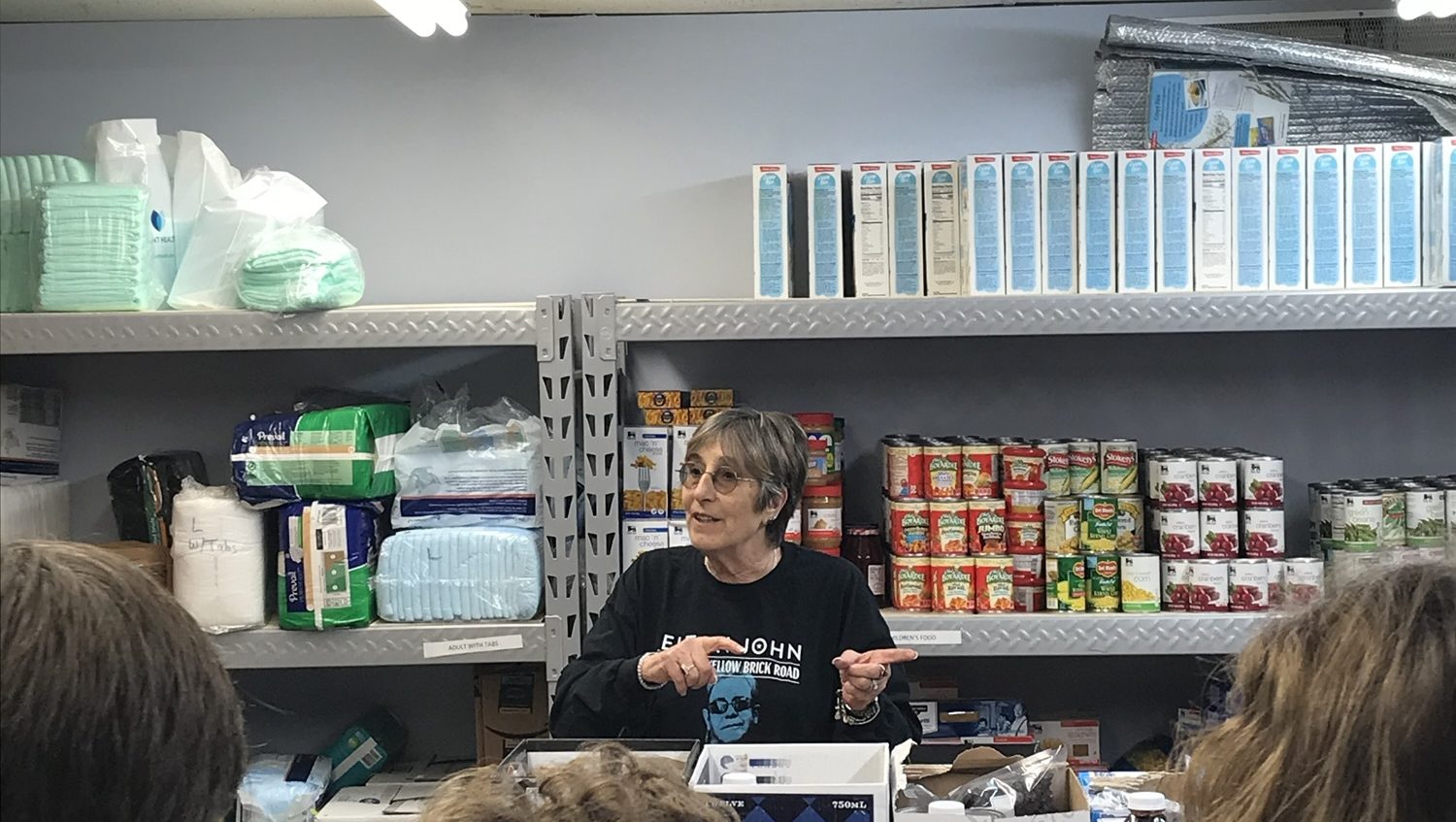
In Edenton, community groups and churches are already preparing for what could become a local hunger crisis if federal benefits don’t arrive.
At Edenton Baptist Church, volunteers have long partnered with the Edenton-Chowan Food Pantry through initiatives like Book Bag Buddies, which provides healthy snacks, fruit cups, and fruit for children at local elementary and middle schools.
“It just takes muscle,” one volunteer said of the weekly effort. “Some heavy lifting — but it’s worth it.”
The church also works with the Food Pantry to distribute unsold food to families in need. Other organizations, such as Open Door Ministries, have hosted soup kitchens in the past to help bridge gaps in food access.
Food Lion regularly donates soon-to-expire items and other goods to the food pantry. St. Paul’s Episcopal Church hosts a drop-off box for shelf-stable goods. Each month, congregants donate food corresponding to that month’s theme.
The Edenton-Chowan Food Pantry, which recently added an online “Donate” button, is urging residents who are able to contribute to do so now. “You can help fill a pantry shelf or feed a local family in just one click,” the group said in a recent post.
Political Tensions Rise in Washington
Meanwhile, tensions in Congress reached a boiling point this week. Senate Majority Leader John Thune (R-SD) accused Democrats of using social programs as leverage during the budget impasse, calling the continuing shutdown “a deliberate act of political brinkmanship.”
Thune’s outburst came after Democrats, led by Sen. Ben Ray Luján (D-NM), pushed for a standalone bill to fund SNAP while negotiations continued on other spending priorities.
“SNAP recipients shouldn’t go without food,” Thune said on the Senate floor. “People should be getting paid in this country. And we’ve tried to do that 13 times. You voted no 13 times.”
State Officials Join Legal Fight
North Carolina Attorney General Jeff Jackson and Gov. Josh Stein have joined the multi-state lawsuit demanding that the USDA release contingency funds to keep payments flowing. They argue the agency has $6 billion in reserves intended precisely for emergencies like this.
Jackson said the USDA’s refusal to use those funds could be “the deliberate precipitation of a major hunger crisis,” and has asked the federal court to issue a temporary restraining order to restart benefits immediately.
While some states like Connecticut, Louisiana, Virginia, and Vermont have found ways to temporarily fund SNAP from state resources, most states — including North Carolina — cannot afford to replace the federal funding on their own.
Impact on Students and Schools
State Superintendent Mo Green noted that more than 500,000 North Carolina children benefit from SNAP and related nutrition programs.
“When SNAP funds are frozen, families rely even more on our schools’ breakfast, lunch, and weekend backpack programs,” Green said. “Hungry students can’t focus on reading or math — they can only focus on their next meal.”
Community Resilience in Uncertain Times
With the court’s decision still pending and no Congressional resolution in sight, local food programs could become the only safety net for many families in Edenton and surrounding communities starting Saturday.
“It’s heartbreaking,” said a local volunteer. “But this is where our churches and neighbors step up. We’ll do what we can to make sure nobody goes hungry.”
Editor’s Note: A ruling on the emergency lawsuit is expected but has not yet been issued as of publication time.