BY MILES LAYTON
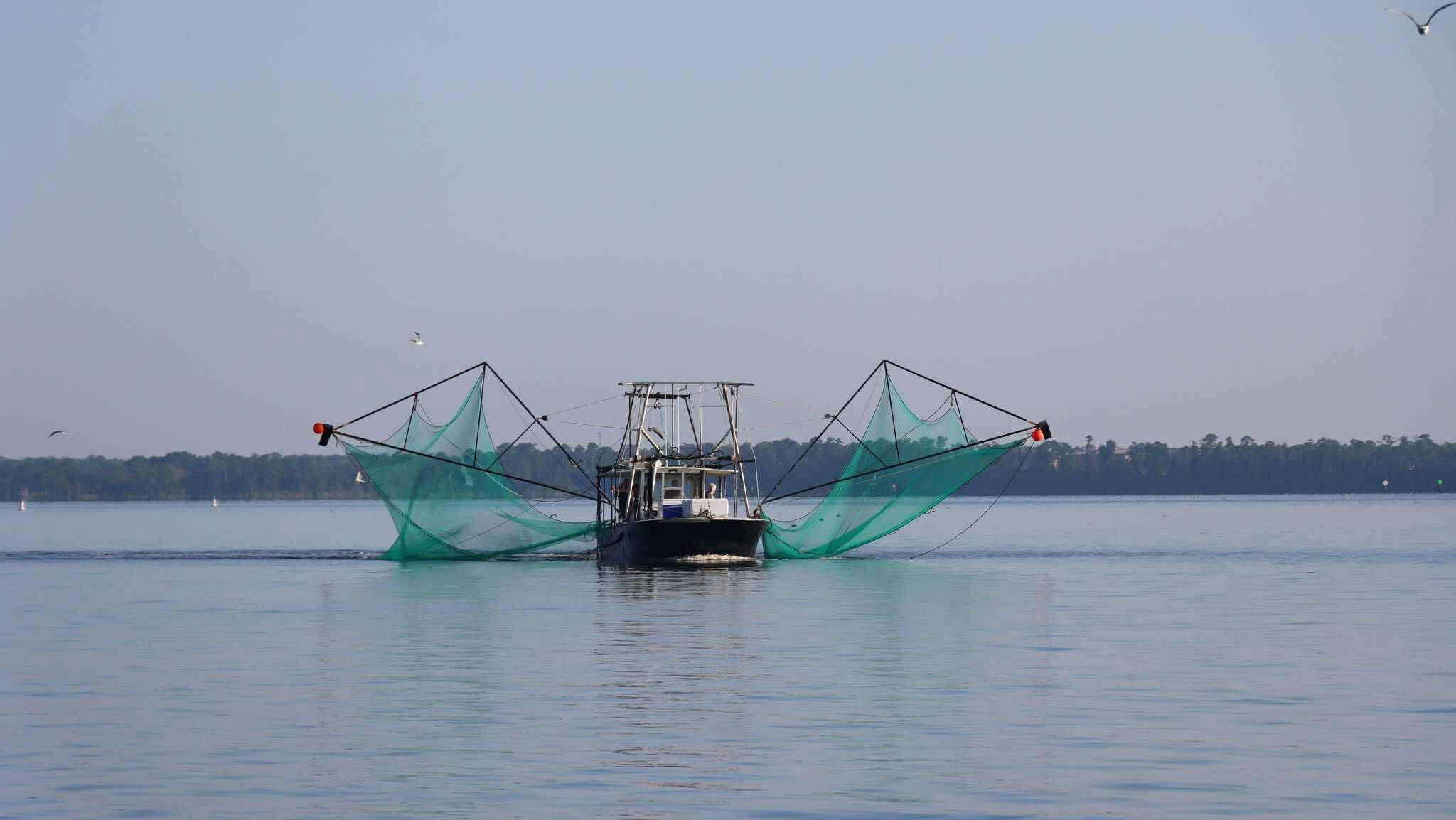
The Albemarle Commission approved a resolution opposing the shrimp trawling ban within a half mile of the Atlantic Ocean on Thursday during its month meeting.
This story also provides the most recent updates that includes mention of similar resolutions against the trawling ban by counties affected by the trawling ban, a video from Newman Seafood about shrimp nets, and letter from NC Representative Keith Kidwell questioning Senator Brent Jackson’s slide of hand, and other folks who have taken a pen to paper to express their points of view, pro and con.
Speaking of legislators, if you want to contact them, fire away on this website or call the General Assembly’s switchboard number is 919-733-4111.
Albemarle Commission is the council of governments & economic development district for 10 counties – Gates, Pasquotank, Currituck, Chowan, Dare, Camden, Perquimans, Washington, Tyrrell and Hyde. Commission’s representatives are powerbrokers whose influence is felt near and far across Northeastern NC.
Posted below is the resolution that states in no uncertain terms the Commission’s opposition to an amendment within HB 442 that seeks to ban shrimp trawling unless that boat is ½ miles from the Atlantic coast.
Worth noting, Hyde and Tyrrell counties, certainly other affected places, have approved similar resolutions condemning HB 442 in recent days.
To the south, the Onslow County Board of Commissioners, led by Chairman Tim Foster, recently sent a letter to State Representatives in opposition of the proposed amendment to House Bill 442 that would ban shrimp trawling in North Carolina’s estuarine waters. The Board expressed concern about the impact this could have on local fishermen, small businesses, and the coastal economy.
They emphasized that North Carolina’s shrimp industry is already one of the most heavily regulated in the country, with science-based rules in place to protect marine life and habitats. The letter encourages state leaders to continue using the established regulatory process — one that balances sustainability with economic opportunity and includes input from those who depend on our coastal waters. View the letter at www.OnslowCountyNC.gov/HB442Letter
And here is an important video — thanks for that — from Newman Seafood about shrimp nets that was shared with the Albemarle Observer. Legislators, others — please give this video a look. Speaking of Newman Seafood, there will be a bus leaving Tuesday morning at 4:30 am heading to Raleigh in opposition of HB 442 and the trawl ban amendment. It will be leaving from Newman Seafood in Swan Quarter and heading to the legislative buildings in Raleigh. As of Friday morning, there were 16 open seats.
Another development — State Representative Keith Kidwell, R-Beaufort, sent letter addressed to NC Senator Brent Jackson, R-Sampson, questioning how the HB 441 was suddenly gutted, changed from being the Loggerhead Turtle/State Reptile bill to the Shrimp Trawling Transition Program/Fees Bill — see below.

Letters
Since social media has its algorithmic limitations, seemingly dividing between silos folks who are against an issue and others who support the matter, thereby keeping us all divided no matter what, here is a letter posted by Ronnie Holden of Shallotte to NC Senator Bill Rabon, R-Brunswick, who voted in favor of HB 442 that is going viral in certain circles. Posted after that are letters from the Coastal Conservation Association and the North Carolina Wildlife Federation in support of HB 442. Lastly, there are letters by Susanne Taylor of Sea Level and Johnna Brooks who oppose the trawling ban — all letters are very insightful.
Dear Senator Rabon,
As a lifelong North Carolinian with deep family ties to Brunswick County and its working waterfronts, I write to express my heartfelt concern over your vote to ban inshore shrimp trawling. For generations, families like mine have pulled their livelihoods—and their legacies—from these coastal waters. This decision threatens not only a way of life, but the cultural fabric of communities built on honest labor and time-honored tradition.
My father was a shrimper. My brother made his living on the water his entire life. Now, my nephew is following in their footsteps—continuing a family legacy that spans generations. But with your recent vote, Senator, it feels as though you’ve turned your back on the very people who have stood by you, supported your veterinarian practice and helped shape the community we both call home. You’ve chosen to dismantle their livelihood.
You described shrimp trawling as “archaic,” but to us, it’s not outdated—it’s heritage. It’s family. It’s resilience in the face of changing tides, both literal and political.
While I understand the importance of protecting our coastal ecosystems, I believe this ban ignores a more balanced path—one that could have preserved both our environment and the human stories that have shaped our coast. Generational watermen deserve a seat at the table, not a closure notice pinned to the dock.
I urge you, Senator, to reconsider how we balance policy with people. North Carolina has always found strength in evolving with its communities—not by erasing them.
Sincerely,
Ronnie Holden
Shallotte, NC
And here is a letter written in support of HB 442 to the Albemarle Observer’s website written by the CCA as provided by Chris Powell.
Thanks to legislative leadership in both chambers of the General Assembly, a major, long-standing stumbling block to restoring our inshore coastal fisheries is about to be removed. An amended bill (House Bill 442) will be voted on by the Senate this afternoon and move quickly back to the House of Representatives for their concurrence. The amended HB 442 would prohibit all shrimp trawl fishing in all inshore North Carolina waters and would do the same within one-half mile of our coastlines. Shrimp trawling for shrimp would still be allowed, but only in the ocean more than one-half mile from our coastlines. This revised bill thus reflects what many citizens and fisheries experts have said is necessary to restore the Pamlico Sound as a fishery, and to begin to rebuild collapsed stocks of fish and blue crab which comprise the staggering bycatch from shrimp trawling in inshore waters. That bycatch is mainly juvenile finfish.
If this revised bill becomes law, North Carolina will finally join all other southeastern states who acted long ago to protect their fisheries from the bycatch from inshore trawling. Shrimp will still be harvested in North Carolina, just offshore. It would also resolve one of the major issues in CCA NC’s pending lawsuit against the State of North Carolina regarding the mismanagement over decades of our coastal fisheries resources. A unanimous NC Court of Appeals ruling has already described the State’s duty: to protect coastal fisheries from injury, harm or destruction for all time. That starts with the legislature.
If you want to see our State take this important step in the right direction, and for the bycatch documented in these pictures to stop in our inshore waters, please immediately call or email your Senator and Representative and urge them to vote “yes” for revised HB 442. Time is of the essence. Do it today. And send this email to friends and family and urge them to do the same thing.
And here is Taylor’s letter that’s gone viral and is making the rounds around social media in opposition to the trawling ban.
Dear Representatives,
My name is Susanne Taylor, and I’m writing to strongly urge you to vote NO on House Bill 442. I’m from Sea Level, North Carolina, where my family owns and operates TA Taylor & Sons Seafood, a business my great-grandfather began in 1937 that still provides for us today. A few years ago, I completed my Honors Thesis at Meredith College on the challenges facing North Carolina’s seafood industry. I’ve spent years researching this topic, and more importantly, I’ve lived it.
I am deeply concerned that decision-makers are only being shown data and perspectives that support the narrative of the bill’s supporters. I urge you to consider the full story before supporting legislation that could further jeopardize the livelihoods of your constituents.
North Carolina’s commercial fishing industry is not only a cultural legacy, but a vital economic driver for our state. What often gets ignored is the ripple effect this industry has across other markets: petroleum sales, boat building and repair, wholesale distribution, food and beverage, real estate, banking, and insurance, just to name a few. Commercial fishing fuels far more of our state’s economy than most people realize.
Historically, shrimp has ranked first or second in economic value among North Carolina fisheries. In 2022, shrimp landings had a dockside value of about $10 million—down dramatically from $30 million in the 1980s and ’90s. The number of licensed shrimpers fell from around 1,000 in 1995 to just 300 in 2022, marking an all-time low.
We are losing a critical American industry. Not because demand has declined—U.S. seafood consumption has more than doubled over the past 50 years—but because we are strangling our own fishermen with restrictions, all while allowing cheap, foreign grown seafood to flood the market. Ninety percent of shrimp consumed in this country is imported. In today’s unpredictable global climate, the last thing we should do is make ourselves more dependent on foreign countries for our food supply.
Supporters of this bill say it’s about making North Carolina in line with other states, but North Carolina is not like other states. We have a unique coastal geography that requires tailored management. North Carolina’s estuarine system is the second-largest in the continental U.S., behind only Louisiana. It includes over 2.3 million acres of estuarine waters—more than any other Atlantic Coast state. Approximately 1 million acres of these waters (about 47%) are permanently closed to shrimp trawling, with another 200,000 acres subject to seasonal closures.
There is a common and harmful misconception that commercial fishermen don’t care about conservation. Nothing could be further from the truth. North Carolina fishermen helped develop Turtle Excluder Devices, supported the designation of over 170,000 acres of nursery habitat, and have worked alongside regulators for decades to reduce bycatch and improve sustainability. No one has more to lose than we do if the environment suffers.
The real threat to our coast is being ignored: waterfront development. Massive vacation homes, condos, hotels, and tourist attractions now border the very same nursery areas that are closed off to fishermen in the name of preservation. These developments bring chemical runoff, overloaded septic systems, trash, and recreational pressure on fish stocks and habitats. In Carteret County alone, the population swells from around 69,000 to over 100,000 during the summer. And yet, the finger is constantly pointed at the few hundred commercial fishermen still hanging on. Why? Because—as the saying goes—money talks. It is easier to blame commercial fishermen than to challenge the deep pockets of development and tourism. At what point do we ask who is truly at fault, and who is paying the price?
There are fewer of us than ever before. Regulations keep coming. And now, HB442 would tighten the noose. This isn’t about protecting the coast, it’s about quietly pushing out the families who’ve worked these waters for generations, just slow enough that no one pays attention. That’s exactly why it was slipped in at the eleventh hour—tacked on as a last-minute amendment, with no public notice and no real chance for the people it impacts most to respond. If this effort were truly about sustainability, it wouldn’t need to hide behind procedural shortcuts.
If North Carolina is serious about protecting its coast, we should start with a balanced, science-driven policy that considers the full picture, not just what’s politically convenient.
As you prepare to cast your vote on House Bill 442, I ask that you remember commercial fishing families like mine. We are watching this decision closely—and we will remember it the next time we are at the ballot box.
Sincerely,
Susanne Taylor
Sea Level
Let’s not forget the North Carolina Wildlife Federation’s support to get this bill passed — statement issued Friday:
North Carolina Wildlife Federation (NCWF) commends the North Carolina Senate for its decisive action in advancing House Bill 442. This landmark legislation would prohibit large-scale, inshore bottom shrimp trawling in North Carolina’s juvenile fish nurseries. The Senate passed the legislation with a resounding 39-2 vote. The organization now urges the North Carolina House of Representatives to swiftly pass this critical protection measure.
“The North Carolina Senate has taken a bold and necessary step to protect our state’s precious public trust resources on the coast,” said Tim Gestwicki, CEO of NCWF. “We thank them for demonstrating their commitment to preserving North Carolina’s marine habitats for current and future generations and urge their colleagues in the House to follow suit.”
Large-scale, inshore bottom shrimp trawling has long been recognized as one of the most destructive fishing practices in coastal waters. The practice drags heavy nets and chains along the seafloor, stripping it of natural habitats, including seagrass meadows, oyster beds, soft corals, and sponges. This indiscriminate shrimping method results in significant bycatch, the unintended capture of non-target species. For every one pound of shrimp harvested, more than four pounds of bycatch are wasted.
Each year hundreds of millions of valuable fish are needlessly killed due to large-scale, inshore bottom shrimp trawling. An estimated 80% of inshore bottom trawling bycatch includes essential juvenile fish like Southern Flounder, weakfish, spot, croaker, and blue crab. These fish are unable to mature and spawn, which contributes to the collapse of North Carolina fisheries, negatively impacting the state’s economy.
HB442 would establish clear protections for North Carolina’s inshore waters while allowing sustainable fishing practices to continue. The legislation represents a balanced approach, prioritizing scientific evidence to preserve long-term ecosystem health and the economic benefits that healthy coastal waters provide to North Carolina’s tourism and fishing industries.
NCWF calls on members of the North Carolina House of Representatives to follow the Senate’s leadership and pass HB442 without delay.
Contact your legislator today, urging them to support HB442 and join every other shrimping state in prohibiting large-scale, inshore bottom shrimp trawling.
——-
Letter posted by Brooks, who is earning a PhD in quantitative fisheries biology.
As a Harkers Island local who is one year away from earning a PhD in quantitative fisheries biology, I’m fed up with the Coastal Conservation Association (CCA), an elitist group of make-pretend “conservationists” who are trying to shut down what is arguably one of the most heavily regulated fisheries in the state.
Groups like the CCA often describe trawling as “clearcutting the ocean floor.” Don’t get me wrong, estuaries are critical nursery habitats for fish. But the way organizations like the CCA portray trawling in inshore waters and sounds gives the impression that most of our estuarine waters are being trawled every year. That simply isn’t true.
In fact, Ray Hilborn, a world-renowned fisheries scientist, directly addresses this misconception in Chapter 10 of his book Ocean Recovery: A Sustainable Future for Global Fisheries (2019). He explains how several studies showed that high-resolution trawling data show that the actual trawling footprint was much smaller than previously believed. Trawl effort was highly concentrated in specific areas known to have suitable bottom habitat and that these areas are fished repeatedly over and over each year. The same holds true in North Carolina. We already have protected nursery areas within our sounds where trawling is already prohibited. And no trawler wants to drag nets over oyster beds or seagrass, which would only damage their gear and make their work harder.
Furthermore, the “clear-cutting” narrative would have you believe that trawlers are turning our estuaries into barren wastelands. But if that were true, how have these same areas remained productive after decades of trawling? Year after year, these grounds continue to support harvests.
The CCA seems more interested in shifting blame than addressing the real issues facing North Carolina’s fisheries. I enjoy recreational fishing as much as anyone, but one fishing sector can’t claim moral superiority just because they keep fewer fish or practice catch-and-release. It’s important to recognize that catch-and-release is not impact-free; studies show that about 10% of released fish still die. That may not seem like much, but when you multiply it across millions of recreational anglers, it adds up quickly.
If this bill passes, it will effectively shut down the commercial shrimping industry in North Carolina. So what’s the plan then? Stop eating shrimp altogether? Or rely entirely on imported shrimp from unregulated overseas fisheries? If we eliminate our own well-managed, sustainable fishery in favor of poorly regulated imports, how exactly is that “saving the ocean”?
Support your local commercial fishermen.
Johnna Brooks, PhD
Harkers Island
2 responses to “Albemarle Commission’s Stance on Shrimp Trawling Ban”
Hey Miles: While I appreciate you publishing my message on your board, the letter was actually cut and paste from a CCA post on another forum. It was my attempt to provide some more balance to the issue. So while I agree with the message wholeheartedly, it wouldn’t be right for me to be given credit for it.
I’ll update — thx — that said, very glad you provided that letter so we have both sides.