By Miles Layton
RALEIGH — North Carolina Gov. Josh Stein called on state lawmakers to approve a “critical needs budget” that includes significant raises for teachers and other public employees during a press conference that featured a prominent speech from a northeastern North Carolina school principal.
Standing alongside educators and advocates, Stein argued that the state’s long-term economic success has been built on investments in public education but warned that failing to support teachers threatens that progress.
“We’re experiencing success and that success is because of our people,” Stein said at Monday’s press conference. “And because we, as a state, have invested in our people through our public schools over the decades. But today, we risk hollowing out the institutions that have helped to create that success. That includes our failure to adequately compensate our children’s teachers.”
Stein outlined a proposal that would raise teacher pay and address several urgent funding gaps while lawmakers work toward a full state budget.
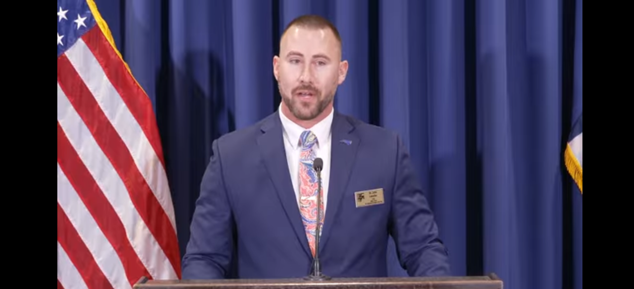
But the emotional centerpiece of the event came from John Lassiter, principal of Hertford Grammar School in Perquimans County and president of the North Carolina Principals and Assistant Principals Association.
A personal story about the power of teachers
Lassiter began his remarks by sharing a deeply personal story about his own childhood struggle in school.
“Governor Stein, thank you for the opportunity to speak for something that has shaped my life, teachers and public education,” Lassiter said. “My name is John Lassiter. I serve as the president of the North Carolina Principal and Assistant Principal Association, a former Wells Fargo Northeast Principal of the Year, and proud to serve as the principal of Hertford Grammar School in Perquimans County, a small rural community that reflects so many towns across our state.”
He then described an experience from third grade that nearly derailed his education.
“I know a third grader who missed more than 40 consecutive days of school from Thanksgiving to Valentine’s Day because he was in and out of the hospital and extremely ill,” Lassiter said. “He fell behind. He struggled to read, and he felt embarrassed.”
Reading in front of classmates became a source of anxiety.
“He was so nervous to read out loud that he would literally sweat when his teachers called on him,” Lassiter said.
That struggling student, he revealed, was himself.
“I know that third grader because I am him,” Lassiter said. “I’m standing here today because my teachers refused to give up on me.”
Those teachers changed the direction of his life.
“They didn’t just teach me to read, they taught me perseverance, hard work and to believe,” Lassiter said.
He said nearly everyone can point to a teacher who had a similar influence.
“I bet if I pause long enough, everyone in this room can think of a teacher who did the same for you,” Lassiter said. “Someone who saw more in you than you saw in yourself.”
Teachers shaping students’ futures
Lassiter said the story illustrates the profound impact educators can have on students’ lives.
“You see that’s what teachers do,” he said. “They quietly change the trajectory of a child’s life.”
Teachers often work in difficult circumstances while still trying to inspire students, he said.
“They carry hope into hard places,” Lassiter said. “They stand with a steady voice that says, ‘You can.’”
But he warned that many teachers now feel underappreciated and unsupported.
“This moment matters because right now too many teachers feel undervalued, ignored and unsupported,” Lassiter said.
At the same time, he said the job of teaching continues to grow more demanding.
“We’re asking them to do a job that gets more challenging every year to meet rising needs,” he said.
Teaching, he added, often brings enormous responsibility with little recognition.
“Teaching can at times be thankless and this profession carries an enormous societal burden,” Lassiter said.
Education disparities remain
Lassiter also spoke about educational inequality and the effects funding levels can have on student opportunities.
“A child’s zip code should not determine the quality of education that they receive,” Lassiter said.
While that idea is widely accepted in principle, he argued that financial realities sometimes undermine it.
“We want to believe that,” Lassiter said. “But if we’re honest, given current levels of funding, right now it often does.”
He said attracting talented teachers to classrooms requires making the profession more appealing.
“If we truly want a highly qualified teacher in every classroom, then our students have to see teaching as a career worth pursuing,” Lassiter said.
That means providing both respect and financial stability.
“One with dignity, stability and a respectable salary,” he said.
North Carolina’s rankings questioned
Lassiter also pointed to a gap between North Carolina’s economic strength and its investment in education.
“Here’s what I can’t wrap my mind around,” he said.
“How can North Carolina be top 10 in the size of its population, top 10 in the size of its economy and be celebrated as best state for business, yet rank in the bottom 10 for teacher pay, public school funding effort and per pupil spending?”
He said the numbers suggest the state should be able to do more.
“In light of this, there’s no reason North Carolina with our growth, our talent and our economic momentum should be asking teachers to carry the future on their back while we fall behind on investing in them,” Lassiter said.
A crossroads for the state
Lassiter described the current moment as a turning point for the state’s education system.
“North Carolina is at a crossroads,” he said.
And crossroads demand decisive leadership.
“A crossroads requires more than good intentions, it requires courageous action,” Lassiter said.
He urged lawmakers to make teacher compensation a priority.
“Educators deserve a raise that reflects the dignity and prestige this profession was once known for,” he said.
Higher pay would also help the state compete with neighboring states that are recruiting North Carolina teachers.
“We need to compete for great teachers across state lines so North Carolina classrooms don’t become training grounds for other states’ workforce,” Lassiter said.
Local solutions in rural schools
Lassiter also described how schools in his region are working creatively to recruit future educators.
“In Perquimans we’ve had to get creative to plan for our future,” he said.
One example is a program designed to encourage high school students to consider careers in teaching.
“Our Grow Your Own program, the PQ Ambassadors, has given high school students the chance to work with elementary classes and experience teaching as a potential career,” Lassiter said.
The initiative has already produced results.
“This year four seniors earned the North Carolina Teaching Fellow scholarship in part because of the success of this program,” he said.
Students who grow up in the community often have a deeper understanding of its needs.
“We know that students with local roots understand both the assets and challenges of our community,” Lassiter said.
They are also more likely to return after college.
“They also will make the most of coming home, teaching and making a long-term impact in Perquimans County,” he said.
A challenge to lawmakers
Near the end of his remarks, Lassiter issued a direct challenge to the General Assembly.
“A professional mentor of mine says that your talk talks and your walk talks, but your walk talks louder than your talk,” Lassiter said.
He urged lawmakers to act rather than debate endlessly.
“So I’m challenging the General Assembly today to let your walk talk,” he said.
He called for compromise and leadership to pass a budget.
“Find compromise, pass a budget, act and lead,” Lassiter said.
He said meaningful investment in teachers would strengthen the entire state.
“Help us take a meaningful step toward restoring the prestige that once came with being a teacher,” he said.
Ultimately, he argued, the issue is about the future of North Carolina’s workforce and communities.
“Make the most important investment a state can make, one that pays dividends for generations,” Lassiter said.
“Invest in teachers. Invest in our children. Invest in public schools.”
When educators succeed, he said, the impact spreads far beyond classrooms.
“Because when we lift educators up, we don’t just strengthen schools, we strengthen communities and lessen the impacts of poverty,” Lassiter said.
Doing so prepares the state’s future workforce.
“Equipping the future workforce of North Carolina to make our state great,” he said.
Stein outlines teacher pay proposal
After Lassiter finished speaking, Stein thanked him and returned to outlining his budget proposal.
“Thank you, Principal Lassiter,” Stein said.
The governor emphasized that teachers are not the only public servants whose pay has fallen behind inflation.
“While we correct pay for teachers, nurses and law enforcement officers, we must also do right by North Carolina’s other public servants,” Stein said.
He pointed to transportation workers and other state employees.
“The transportation workers clearing roads in winter weather, the benefit specialists helping veterans get connected to services and so many others,” he said.
According to Stein, many state employees have gone nearly two years without a raise.
“None of them have received any raise in pay in nearly two years despite inflation and rising costs,” Stein said.
Health insurance costs have also increased.
“Health insurance premiums just went up for state employees,” Stein said. “So essentially our state employees are being asked to do the same job today for less money than they earned a year ago.”
A call for bipartisan action
Stein concluded by urging lawmakers to work together to address the immediate needs while continuing negotiations over a broader budget.
“We’re going to work together to develop a comprehensive, fiscally responsible budget for the short session,” Stein said.
But he said action is needed immediately.
“Before we do that, let’s act now to keep North Carolina strong and to address certain critical needs,” he said.
Stein said stability and investment are essential to the state’s future.
“Together we can lead our state and stop the bleeding,” Stein said.
“Let’s give North Carolinians the stability they deserve and pass this critical needs budget that makes essential investments in our safety, our health and our education.”
Make a one-time donation
Make a monthly donation
Make a yearly donation
Choose an amount
Or enter a custom amount
Your contribution is appreciated.
Your contribution is appreciated.
Your contribution is appreciated.
DonateDonate monthlyDonate yearly
Let us know what you think by leaving a comment. Comments are subject to approval.